The Art of the Shower Guides & advice
Bathroom humidity: causes, solutions and the role of the shower enclosure
Bathroom humidity in winter: why condensation forms and how to reduce it with ventilation, an extractor fan, a dehumidifier and the right shower enclosure.
Bathroom humidity rises in winter because the steam from the shower meets cold walls, glass and mirrors and turns into condensation, while windows stay shut for longer. To keep it under control you need three things: regular air changes, an extractor fan sized for the room (essential in a windowless bathroom) and, in the toughest cases, a dehumidifier as back-up. The type of shower matters too: a closed enclosure holds the steam in, while an open walk-in lets it spread through the whole room.
This guide is about prevention, in other words how to stop moisture building up in the bathroom. If you already have black spots on silicone and grout, you will find the steps to get rid of them in our guide on how to remove mould from a shower.
Why bathroom humidity rises in winter
The bathroom produces more steam than any other room in the house, and in the cold months the conditions for getting rid of it get worse. There are four main causes.
- Hotter, longer showers. The hotter the water, the more steam ends up in the air within a few minutes.
- Cold surfaces. When warm, steam-laden air touches a colder outside wall, window or mirror, it reaches what is known as the dew point and the water settles as droplets: that is condensation.
- Closed windows. When it is cold, windows are opened less often and for less time, so the damp air stays inside.
- Laundry and towels drying in the bathroom. Washing drying on an airer or on the radiator releases water into the room for hours.
As a reference point, the ideal relative humidity in a home is between 40 and 60%. Higher, constant levels encourage mould to grow. A digital hygrometer costs a few euros and tells you straight away whether your bathroom humidity is within this range or stays high for hours after a shower.
The warning signs not to ignore
You can spot bathroom humidity before any mould appears. Look out for:
- mirror and glass still fogged up 15-20 minutes after a shower
- drops on the ceiling, especially above the shower area
- towels that are still damp the next day
- a persistent musty smell
- paint bubbling or peeling near the ceiling and in the corners
- the first dark marks on grout, silicone and outside walls
If you recognise two or three of these signs, ventilation alone is not enough and it is worth acting before bathroom mould spreads to the walls.
Ventilation: the habits that make a difference
The cheapest way to fight bathroom humidity is also the most overlooked: airing the room properly. In winter it is better to open the window wide for 5-10 minutes straight after a shower than to leave it tilted open for hours. A short, complete air change refreshes the air without cooling walls and floor too much, whereas a window left ajar all morning chills the surfaces and leads to more condensation.
A few more habits:
- keep the bathroom door closed while you shower, so the steam does not move into the rest of the house
- run a squeegee over the enclosure glass and a cloth over the shower walls: the less water left on the surfaces, the less evaporates afterwards
- do not dry laundry in the bathroom unless you have an extractor fan or a dehumidifier running
- keep the heating on in the bathroom too: warmer walls mean less condensation. A heated towel rail warms the room and dries your towels at the same time
Bathroom extractor fan: how to choose it and where to fit it
When the window is not enough, or there is none, the bathroom extractor fan is the main tool for reducing bathroom humidity. It draws out the damp air and sends it outside, while drier air comes in from the other rooms.
Useful features
- Humidistat: the fan switches itself on when humidity goes above the set level and off again when it returns to normal. It is the most useful feature for anyone who forgets to turn it on.
- Timer: keeps the fan running for a few minutes after you have switched off the light or left the bathroom.
- Backdraft valve: stops cold outside air from coming back in when the fan is off.
- Quiet operation: if the bathroom is next to the bedrooms, check the stated decibels before you buy.
Where to fit it
The extractor fan should go high up, where warm, damp air collects, ideally on the wall opposite the door so the air crosses the whole room. It is best not to put it directly above the shower head: it would draw the heat away while you shower, a detail that matters especially with open showers, as we explain in our article on whether a walk-in shower is cold. A common mistake is forgetting the air inlet: if the door closes airtight, the fan works to no effect. A gap under the door or a small grille is all it takes.
Windowless bathroom: when an extractor fan is mandatory
In a windowless bathroom the moisture has no natural way out. That is why Italian national regulations (Ministerial Decree of 5 July 1975) only allow bathrooms without an outside opening if they have mechanical extraction.
The number of air changes required is set by the building and health regulations of each municipality. The Milan building regulations, for example, require six air volumes per hour with continuous extraction, or twelve with intermittent extraction, with an automatic timer control. Before choosing an extractor fan for a windowless bathroom, check your local regulations.
Two practical tips:
- if the air has to travel through a long or bending duct to the outside, you will generally need a centrifugal fan, which pushes harder than an axial model
- in a windowless bathroom a fan with a humidistat is almost a must, because humidity rises every time you turn on the hot water
Bathroom dehumidifier: when you really need one
A bathroom dehumidifier does not replace the extractor fan: the fan takes the damp air outside, while the dehumidifier collects the water in the air and holds it in a tank. It makes sense in three situations:
- bathrooms where humidity stays high even with the extractor fan on
- bathrooms where laundry is often hung to dry
- windowless bathrooms with a weak extraction system, while waiting for work to be done
If you choose an electric model, place it away from the shower and any water spray, in line with the safety zones of the electrical system, and check the collection capacity stated in litres per 24 hours. Salt-based dehumidifiers, which need no power, absorb very little water: they can help in a cupboard or a rarely used guest bathroom, but they cannot cope with bathroom humidity after a daily shower.
Closed enclosure or walk-in: what changes for bathroom humidity
The type of shower affects where the steam ends up. There is no right choice in absolute terms, but it is useful to know how the two solutions behave.
Closed shower enclosure
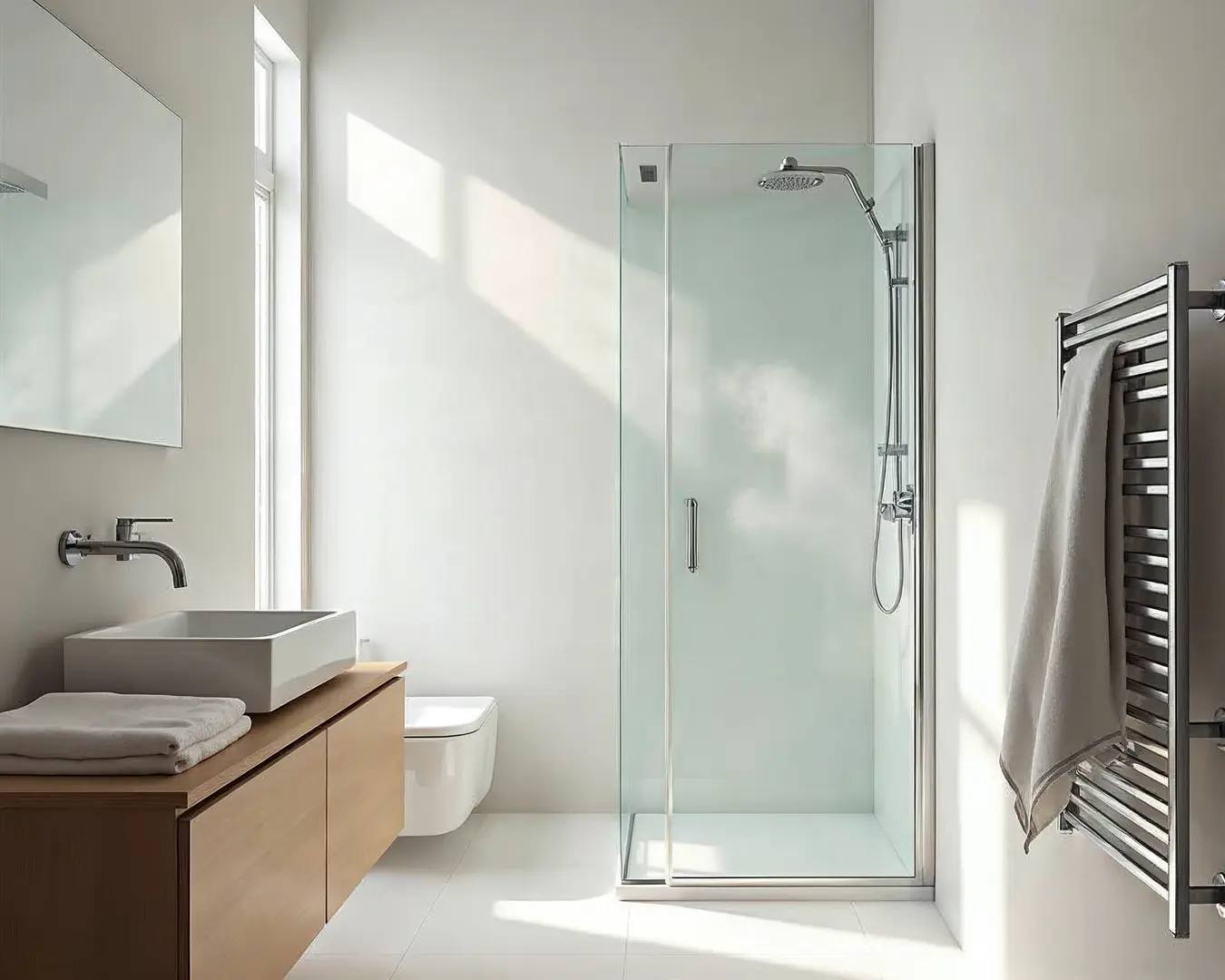
A closed alcove shower enclosure keeps most of the steam inside the cubicle. Mirrors, walls and bathroom furniture fog up less and humidity rises more slowly. On the other hand, the inside of the enclosure stays damp for longer: after showering, open the doors and turn on the extractor fan, so the steam comes out gradually and is drawn away. CSA alcove enclosures are made to measure to the millimetre, with aluminium or stainless steel profiles, and close off the shower without leaving uneven gaps at the sides.
Open walk-in shower
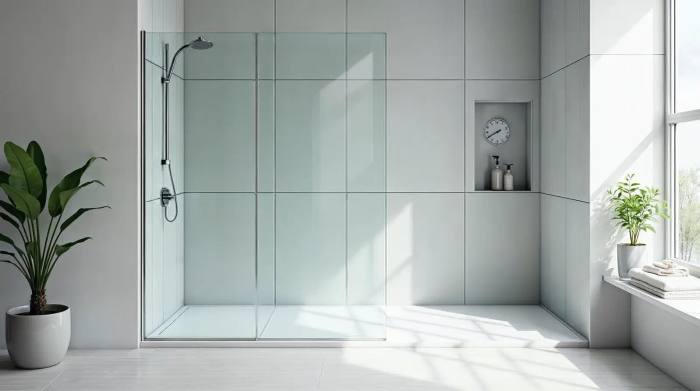
A walk-in shower lets the steam spread freely through the whole room. The result is more condensation on mirrors, tiles and ceiling, and a bathroom that fogs up faster. The upside is that the shower area dries sooner, because the air circulates. With a walk-in, ventilation becomes even more important. CSA models can be paired with a second panel or a pivoting flap to keep splashes in.
If you already have a walk-in and the bathroom stays too damp, you can consider enclosing an existing walk-in shower with a glass door or a technical curtain.
Glass and tray: the details that help
- Anti-limescale glass. On anti-limescale shower glass water runs off in drops instead of forming a film. The glass dries faster, there is less water left to evaporate and less soap residue builds up, which is mould's favourite food.
- Resin shower tray. A resin shower tray is a single piece, without the grout lines of a tiled floor where water sits and mould finds room to grow. CSA trays have a non-slip, antibacterial surface and can be cut to size.
Preventing bathroom humidity takes a whole system
No single solution works on its own. Bathroom humidity is kept under control with good habits, an extractor fan suited to the room, a dehumidifier when needed and a shower chosen partly for how it handles steam. If you are renovating or thinking of changing your enclosure, contact CSA: we will help you choose the best solution for your bathroom.
Frequently asked questions
How do you get rid of humidity in a bathroom without a window?
You need an extractor fan, ideally with a humidistat and timer, and an air inlet under the door. In a windowless bathroom mechanical extraction is also a legal requirement in Italy. A dehumidifier can help, but only as back-up.
Is an extractor fan or a dehumidifier better for a bathroom?
For humidity caused by the shower, the extractor fan is the first choice, because it takes the damp air outside in a few minutes. A dehumidifier is useful when the fan is not enough or when laundry is dried in the bathroom.
How long should the extractor fan stay on after a shower?
It depends on the size of the bathroom and the power of the fan. The simplest way is to rely on the humidistat, which switches it off when humidity returns to normal. Without a humidistat, a timer stops you from switching it off too soon.
What is the right humidity level in a bathroom?
In the home the ideal level is between 40 and 60%. In the bathroom it is normal to go above that during and just after a shower: the problem starts when humidity stays high for hours.
Does a closed shower enclosure reduce bathroom humidity?
It contains the steam while you shower, so mirrors and walls fog up less. The steam still has to be removed, though: after showering, open the doors and turn on the extractor fan.