The Art of the Shower Installation & maintenance
How to remove mould from a shower: silicone, grout and seals
How to remove mould from a shower: practical steps for silicone, grout and seals, and the enclosure choices that stop mould from coming back.
To remove mould from a shower you need a product that suits the surface: diluted bleach or hydrogen peroxide for silicone and grout, a bicarbonate of soda paste for the seals. Apply it to the stains, leave it for 15-30 minutes, scrub, rinse and dry. If the silicone is still dark after two treatments, the mould has gone deep and the bead needs replacing.
Knowing how to remove mould from a shower is only half the job, though. If the bathroom stays damp, if the silicone is old or if the enclosure has profiles and joints where water sits, the black spots come back within a few weeks. Here you will find the steps to clean every problem area and the structural choices that tackle the cause at its root.
Why mould forms in the shower
Shower mould is a fungus that needs three things: constant moisture, little air and some organic matter to feed on, such as soap, shampoo residue and skin cells. A shower enclosure provides all three, every single day.
It always shows up first in the same places:
- silicone: it is flexible and slightly porous, and as it ages it holds water in tiny cracks
- seals: the PVC fins stay wet for a long time and dirt builds up in the folds
- grout: cement grout absorbs water and, if it is not protected, becomes an ideal breeding ground for spores
- profiles and tracks: corners and runners of the enclosure where water collects after every shower
Then there is ventilation. In a windowless bathroom or one without an extractor fan, humidity stays high for hours and undoes even the most thorough cleaning. That is why, before working out how to remove mould from a shower, it is worth looking at where it forms: the position of the stains already tells you a lot about what is not working.
What you need before you start
To remove shower mould with what you already have at home, you will need:
- rubber gloves and, if you use bleach, a mask and an open window
- bleach (sodium hypochlorite) to dilute in water, or 3% hydrogen peroxide (10-12 volume) if you prefer to avoid chlorine
- bicarbonate of soda, for more delicate surfaces
- a medium-bristle brush and a microfibre cloth
- a spray bottle and a few sheets of kitchen paper
One rule always applies: never mix bleach with vinegar, ammonia or acidic limescale removers. The reaction releases toxic gases, even in small amounts.
How to remove mould from a shower: step by step
Here is how to remove mould from a shower in six steps that work on almost every surface of the enclosure.
- Air the bathroom. Open the window or switch on the extractor fan and leave the enclosure doors open.
- Dry the surfaces. The product works better if it is not diluted by water left on the silicone and tray.
- Apply the product to the stains. Spray diluted bleach (one part to four parts water) or hydrogen peroxide straight onto the mould. On silicone and in corners you can lay soaked strips of kitchen paper, so the product stays in contact for longer.
- Leave it to work. 15 to 30 minutes for light stains, up to an hour for darker ones.
- Scrub and rinse. Brush along the grout and silicone lines, then rinse with lukewarm water.
- Dry everything. Wipe the silicone, seals and profiles: leaving water behind is the quickest way to start all over again.
If the stain does not fade after two treatments, the problem is no longer cleaning but the material itself. Let's look at each problem area in turn.
Mould on shower silicone
Mould on shower silicone is the most stubborn, because the spores get inside the sealant and stain it from within. If the surface comes up clean but grey specks remain underneath, no product will reach them. In that case there is only one answer: remove the old bead and reseal with a neutral, anti-mould silicone. The full procedure is in our guide to shower enclosure silicone.
Mould in shower grout
Mould in shower grout responds well to diluted bleach, applied with the brush along the whole grout line. Once the grout is dry, you can protect it with a water-repellent sealer that reduces water absorption. If the grout crumbles or stays dark deep down, it needs redoing.
Mould on shower enclosure seals
On PVC seals it is best to avoid harsh products, which make them stiff over time. Use a paste of bicarbonate of soda and a little water instead, leave it to work and brush it into the folds. If the mould stays in the fins, or the seal is yellowed, stiff or cracked, the solution is to replace it. Through our spare parts and support service you can find the profile that matches your glass thickness and model.
Black mould in the shower: when to worry
Black mould is the most common kind in showers and in most cases it stays on the surface. It becomes a warning sign when it also appears outside the enclosure: on the walls, the ceiling or along the skirting board. Then cleaning the shower is not enough, because the problem may be a leak under the tray or poor ventilation in the whole bathroom, and it is wise to have a professional take a look.
The mistakes that bring mould back
Even people who know how to remove mould from a shower often make mistakes that undo the work:
- applying new silicone over the old, mouldy bead
- using neat bleach thinking it cleans better: it damages silicone and seals
- closing the doors straight after showering
- doing a deep clean once a month and nothing in between
- ignoring broken seals that leave standing water on the tray
Structural prevention: what to change in your shower enclosure
Cleaning removes the stains you can see. Real prevention starts with the enclosure, because fewer places for water to sit means less mould to remove. If you are planning a renovation, or your enclosure is already quite a few years old, three choices make all the difference.
Fewer profiles and hidden corners
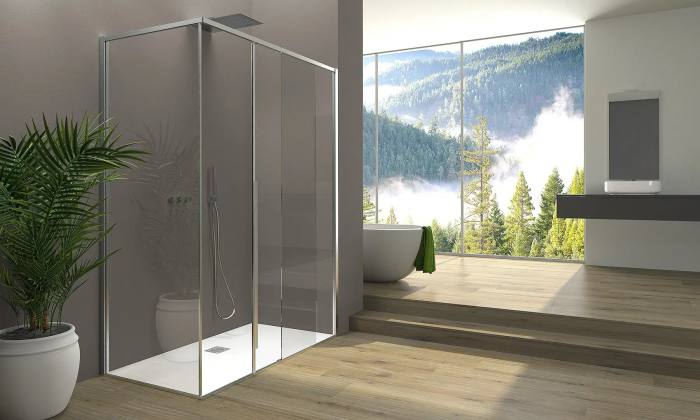
Every profile, track and joint is one more place where water stops and dirt builds up. Enclosures with a minimal structure reduce these problem areas and can be cleaned in a few moves, as we explain in our article on looking after a frameless shower enclosure. The same goes for sliding models: Kalea N.FS, for example, has a minimal design and a sliding door with a quick-release system, so you can clean the runners and edges without taking anything apart.
Anti-limescale glass
People looking for ways to get rid of shower mould often overlook the glass, yet limescale and soap residue are what mould feeds on. Factory-treated anti-limescale shower glass lets water run off instead of leaving a thin film, and takes most of the residue with it. Less film on the glass means less dirt running down towards the seals and silicone.
A shower tray without grout lines
The tray is where water lingers longest, and it is often where people first wonder how to remove mould from the shower. A one-piece tray does away with grout lines on the floor, which is exactly where mould forms most easily in tiled showers. CSA resin shower trays are monolithic, with a non-slip, stain-resistant and antibacterial surface, and can be cut to size.
Habits that keep mould away
Once you know how to remove mould from a shower, keeping it away comes down to a few daily habits:
- air the bathroom for at least 15-20 minutes after every shower, or leave the extractor fan on
- leave the doors open until the enclosure is dry
- use a squeegee on the glass and wipe the silicone and seals (more tips in our guide on how to clean a shower enclosure)
- once a week, spray a little hydrogen peroxide on the problem areas
- check the condition of the silicone and seals at least once a year
Frequently asked questions
How can I remove mould from a shower quickly?
Bleach diluted in water, one part to four, sprayed on the stains and left for 15-30 minutes. Then scrub, rinse and dry.
How can I remove mould from a shower without bleach?
3% hydrogen peroxide works well on silicone and grout, while a bicarbonate of soda paste is suited to seals. They need a little longer to work, but they don't smell of chlorine.
Why does mould always come back in the same spot?
Because water collects there: ageing silicone, a damaged seal or grout that soaks it up. As long as the cause remains, the mould will keep coming back however well you clean it.
How often should shower silicone be replaced?
There is no fixed deadline: replace it when it darkens deep down, comes away from the edges or loses its elasticity.
Is black mould in the shower dangerous?
In small amounts and on the surface it is mainly a hygiene and appearance issue. But if it spreads to the walls or keeps coming back, it is best to tackle the cause and have a professional assess it.
From cleaning to prevention
Knowing how to remove mould from a shower lets you solve the problem today. Choosing an enclosure with fewer profiles, anti-limescale glass and a tray without grout lines saves you from doing it all again next month. If you are considering a new enclosure or shower tray, get in touch with CSA: we will help you choose the best solution for your bathroom.