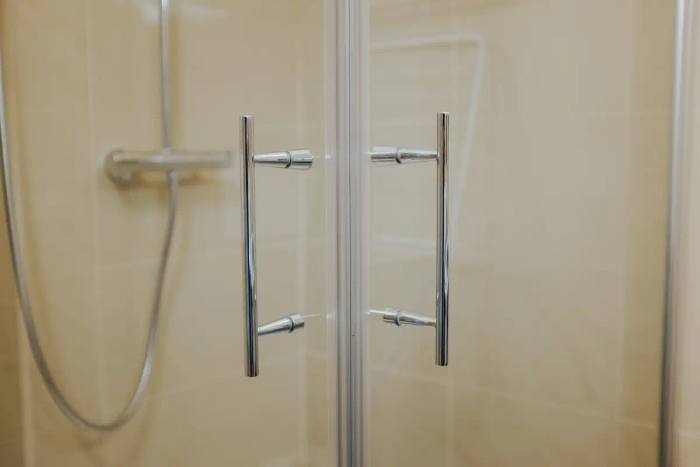
Shower enclosure spare parts: seals, hinges and rollers
When a shower enclosure starts to let you down, the glass is almost never the problem. It’s the small mechanical components – seals, hinges and rollers – that give way first after years of humidity, limescale and daily use. Finding reliable shower enclosure spare parts and after-sales support is therefore what separates a repair done in a few hours from having to replace the entire structure. In this guide we look at how to identify the compatible part, which warning signs to watch for before the damage gets worse, and why the long-term availability of spare parts should carry as much weight as design when choosing a shower enclosure.
Why spare parts availability matters more than the initial price
Many people buy a shower enclosure looking only at how the glass looks, without asking what will happen in five or ten years’ time when a hinge works loose or a roller breaks. This is where the real value of a structured shower enclosure spare parts and support service comes in: a cheap product, often imported, frequently has no parts available after just a few years, forcing a complete replacement. A brand that guarantees spare parts and support for the long term, on the other hand, lets you carry out targeted repairs, with clear savings in both time and cost.
For a retailer, this is also a concrete selling point: being able to tell customers that there is a spare parts service that stays active over the years, with technicians on hand to clear up any doubts about compatibility, reassures anyone about to make a significant investment in their bathroom and reduces objections before the purchase.
Shower enclosure seals: types and how to identify the right part
Seals are the component most prone to wear because they work in direct contact with water, soap and descaling products. Over time the PVC stiffens, yellows or cracks, letting water through. There are three main families: bottom door seals (or drip seals), magnetic seals for hinged doors, and side seals, used to close the gap between the fixed glass panel and the wall.
To choose the right replacement you need three measurements: the glass thickness (usually 6 or 8 mm), the gap to be covered and the shape of the enclosure, since round and quadrant models require pre-curved profiles. We covered this topic in depth in our dedicated guide to shower door seals, useful if you want to measure and replace your seal yourself.
Shower enclosure hinges: when to replace them and how to choose a compatible part
Hinges bear the weight of the door every time it opens and closes, often for thousands of cycles. When they start to fail, the door no longer closes properly, squeaks or shows visible play between the glass and the frame. Oxidation of the internal screws is another sign not to be underestimated, especially on older enclosures.
The real obstacle when looking for replacement shower enclosure hinges is compatibility: every manufacturer uses slightly different hole centres and fixing systems, and a hinge that looks similar may not fit properly. That is why, before ordering, it’s worth photographing the hinge in place (and removed, if possible) and checking the hole centres, the intended glass thickness and the opening direction. A serious spare parts and support service should always start from this technical check, avoiding returns and wasted time.
Another aspect not to overlook is the hinge material. Chrome-plated brass and stainless steel resist corrosion better than cheaper alloys, which wear out after just a few cycles. Checking the finish of the replacement part, as well as its dimensions, saves you from having to replace it again a few months later.
If you’d like to combine the replacement with a small makeover, you can also consider a change of finish, from polished chrome to matt black: our guide to shower enclosure profiles explains how the finish of the metal components can completely change the character of the bathroom.
Shower enclosure rollers: bearings, sliding action and signs of wear
In sliding enclosures, the rollers (also called runners or wheels) are the heart of the door’s movement. They run inside the top or bottom track and carry the entire weight of the glass every time the door opens. When a door scrapes, is noisy or partly comes out of its track, the cause is almost always a damaged bearing or a roller that has come loose.
Top-hung systems, where the weight rests mainly on the upper track, tend to put less stress on the bottom rollers and keep the sliding action smooth for longer. Quality bearings are made of metal coated with nylon or Teflon: all-plastic ones wear out quickly, causing that typical grating noise. For a technical look at materials and maintenance, our page dedicated to shower enclosure tracks explains in detail how to recognise a quality track and extend its working life.
A further useful check concerns the quick-release system found on many recent models: it lets you unhook the door from the track in a few seconds to clean thoroughly and inspect the rollers without dismantling the entire frame. If your enclosure doesn’t have this feature, regular cleaning with warm water and white vinegar still reduces the build-up of limescale that strains the bearings.
The same principle applies here too: finding the exact roller means knowing the make, model and generation of the enclosure – information that a well-organised spare parts and support service should be able to retrieve quickly from a simple photo or the serial number.
How to request shower enclosure spare parts and support: the right procedure
To avoid wrong orders and returns, it’s worth following a few simple steps before contacting a retailer. Photograph the component to be replaced, ideally removed and laid next to a tape measure, measure the glass thickness with a calliper and note down any codes or markings printed on the original part. This information allows whoever handles spare parts and support to identify the correct part at the first attempt, without endless email exchanges or wrong deliveries.
A good service of this kind should also give clear information on delivery times, stock availability and the option of speaking to a technician if you are unsure about compatibility. This is no minor detail: a part that arrives but doesn’t fit means losing more time and often paying for shipping twice, as well as leaving the shower enclosure out of use for days just when a quick fix is needed.
Why long-term spare parts availability is a selling point
For anyone selling shower enclosures, communicating that a solid spare parts and support service exists is not just a technical detail but a real commercial lever. A customer who knows they can count on spare parts being available in five or ten years’ time sees the purchase as a safer investment, rather than an expense at risk of obsolescence.
CSA Box Doccia designs its own components – tracks, hinges and bearings – with exactly this long-term continuity in mind, so that retailers and end customers can always rely on spare parts and support consistent with the model they originally bought. If you need assistance, you can visit the CSA contact page or find your nearest dealer using the store locator.
FAQ
How can I tell if I need shower enclosure spare parts or support?
The most common signs are water escaping despite the seals, a door that squeaks or no longer lines up, or a roller that scrapes or comes out of its track. In these cases it’s best to contact a spare parts and support service before the damage spreads to other components.
How much do shower enclosure spare parts and repairs cost?
The cost varies widely depending on the component: a seal is inexpensive, while hinges and rollers can cost more, especially if the model is old or not widely sold. Always ask for a detailed quote before going ahead.
Can I replace shower enclosure parts myself without calling a technician?
Seals and, in some cases, profiles can be replaced yourself with just a few tools. Hinges and rollers need more care, because a fitting error can damage the glass: in these cases a qualified spare parts and support service reduces the risk of mistakes.
How do I find the right spare part for my shower enclosure?
You’ll need the make, the model and, if possible, photos of the original component with a reference measurement next to it. A reliable spare parts and support service will always ask for this information before confirming the order, to avoid returns.
How long does delivery of shower enclosure spare parts take?
It depends on stock availability: the most common components, such as standard seals, are often available within a few days, while special or discontinued parts may take longer.