Shower enclosure accessories: shelves, soap dishes and hooks
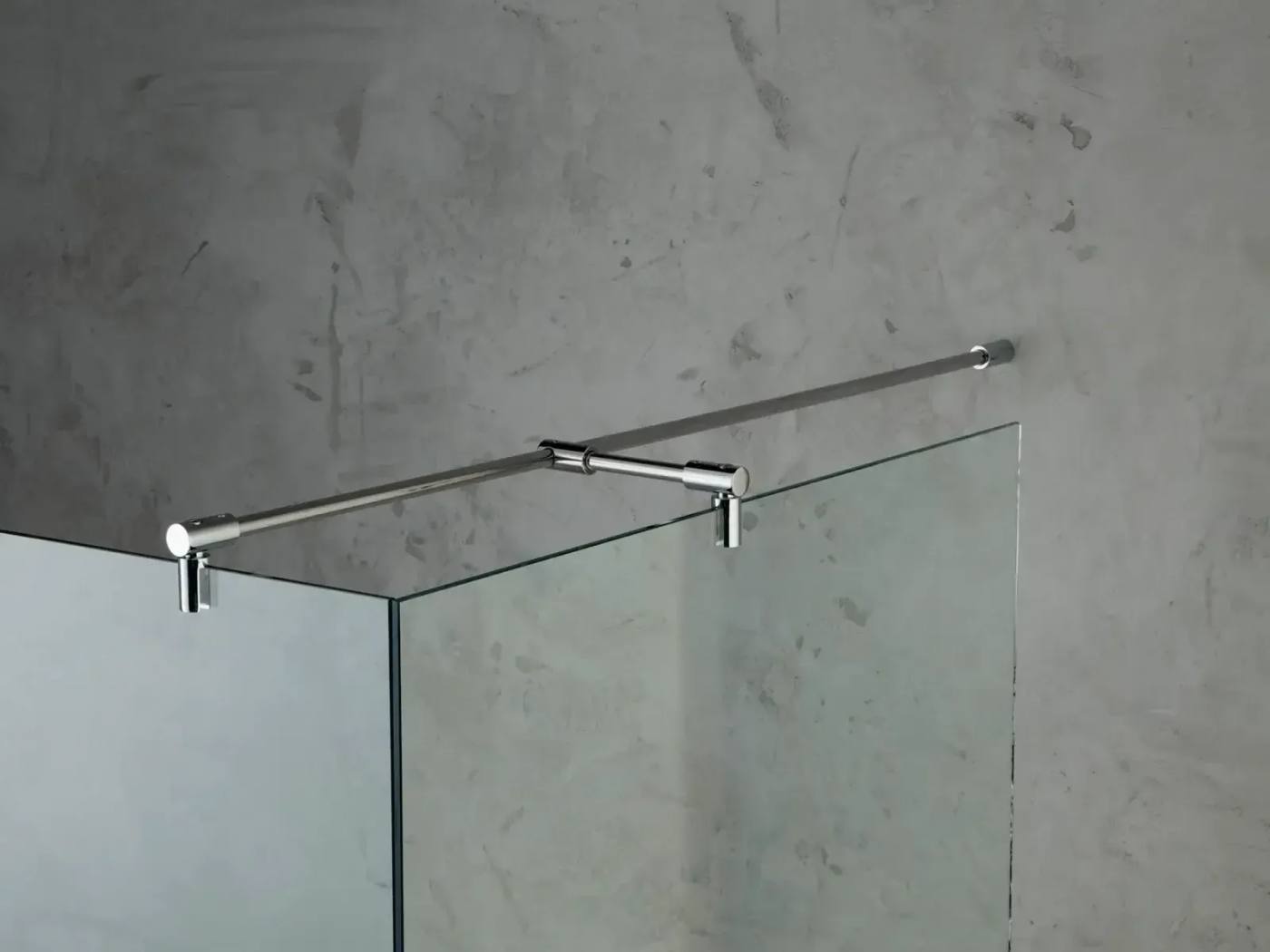
The shower gel balanced on the edge of the tray, the bathrobe thrown over the enclosure door: shower enclosure accessories exist precisely to solve these small everyday problems, which almost never depend on the enclosure you chose and almost always on what is missing around it.
The razor rolling towards the drain is another example: without a fixed place for soap, sponges and bathrobes, showering gets more awkward every day. In this guide you will find out how to choose the right shelves, soap dishes and hooks for your enclosure, without cluttering the cabin with stray pieces or drilling glass that should not be touched.
Shower enclosure accessories: what they are and what they are for
Shower enclosure accessories means everything you need to organise the shower space: shelves for shampoo and shower gel, soap dishes and dispensers, hooks for bathrobes and sponges. It is a different subject from shower enclosure spare parts and servicing, which covers the enclosure’s mechanical components: seals, hinges, rollers for sliding doors.
If the enclosure does not close properly or leaks water from the profile, the problem is technical and you will find the solution in the spare parts guide. If instead the shampoo has nowhere to go, you are in the right place: shower enclosure accessories solve an organisation problem, not a problem with how the enclosure works.
The right choice depends on three things: the space in the cabin, the surface you will fix the accessories to – glass, masonry or profile – and the weight they need to hold without coming loose after a few months.
Shower shelves: where to put them and how to choose the right size
Shower shelves are probably the most requested accessory: they solve the problem of bottles and sponges scattered around the cabin. There are two main formats: the corner shelf, for enclosures with a square or rectangular tray, and the straight shelf, better suited to a long free wall.
The size depends on how many products you want to keep within reach. A 15–20 centimetre corner shelf is enough for two or three bottles, while a straight shelf of 30 centimetres or more suits those who share the bathroom and want to keep their products separate.
Height matters more than you might think. A shelf that is too high forces you to stretch with wet hands; one that is too low gets soaked by the shower head. Between 1.10 and 1.40 metres from the floor remains the most comfortable range, and the same applies to soap dishes and dispensers.
In a small cabin, every extra shower enclosure accessory should be chosen with the centimetres in mind, not just the style: a slim model in glass or wire mesh takes up less room than two bottles left on the floor.
Soap dishes and dispensers: drill-free solutions
The soap dish is one of the simplest shower enclosure accessories to choose, but also the one where the fixing method is most often got wrong. On the toughened glass of the enclosure, drilling is almost never a good idea: it risks weakening the panel and, in many cases, voids the manufacturer’s guarantee.
Drill-free systems today work almost like a mechanical fixing. Suction dispensers with a wide base and snap-lock closure hold a bottle firmly even after months of hot showers, provided the glass is cleaned before applying them. High-strength adhesive mounts are the alternative when suction will not grip, for example on frosted glass.
If you prefer a sturdier attachment, you can opt for a clamp-on dispenser that tightens around the vertical profile without touching the glass: handy for anyone who does not want to leave marks if they change their mind.
Hooks: organising bathrobes and sponges
Hooks complete the picture of shower enclosure accessories by solving the last practical problem: where to put the sponge during your shower and where to hang the bathrobe as soon as you step out.
Suction hooks remain the most popular choice for quick hanging, useful for a sponge or an exfoliating mitt that needs to dry between uses. For a bathrobe, which is heavier when wet, a clamp-on hook on the profile or a wall hook outside the enclosure is better, so the weight does not strain the fixing on the glass.
Here too, visual consistency matters: a chrome hook on a matt black profile stands out, and not in a good way. It is worth choosing hooks in the same finish as your other shower enclosure accessories, so the whole set looks planned rather than added at the last minute.
Shower enclosure accessories: materials and finishes to match your enclosure
Not all materials cope well with the humidity of a shower used every day. Stainless steel, in particular AISI 304, remains the benchmark for shower enclosure accessories because it does not rust and keeps its finish after years of hot water and descaling products. ABS plastic versions cost less, but tend to yellow and become brittle over time.
Finishes follow the trends in enclosure profiles: polished chrome for classic bathrooms, matt black and nickel for dark bathrooms, bronze and brass for a warmer tone. Choosing shower enclosure accessories in the same finish as the profile or the taps is the easiest way to make everything look coordinated. In general, quality shower enclosure accessories can be recognised by the weight and rigidity of the material, not just by the price.
How to fit shower enclosure accessories without damaging the glass
Drill-free fitting is now the most popular choice, but it needs two or three precautions to last. The surface must be cleaned thoroughly, with no soap or silicone residue, before applying the suction cup or adhesive: that is the most common reason an accessory falls off after a week.
Temperature matters more than you might think. An adhesive applied to cold glass, just after opening the windows in winter, holds less well. It is better to wait a few minutes before fixing it, especially for models that carry more weight, such as a shelf holding several bottles.
If the enclosure has an aluminium or steel profile, many shower enclosure accessories fix with a clamp or clip, without touching the glass: the safest option when the panel is already installed and you do not want to work on the surface.
How to choose the right shower enclosure accessories for your bathroom
Before buying, it is worth checking four points:
- the free space in the cabin and how many products you want to keep within reach
- the surface you will fix the accessories to – glass, profile or masonry – to choose the right fixing
- the material, with a preference for stainless steel if you shower every day
- the finish, to match the shower enclosure profile and the taps already in the bathroom
The right shower enclosure accessories are the ones you only notice when they are missing: they organise the space without weighing down the look of the cabin and without drilling that, in most cases, is not really necessary. If you are still choosing the shower enclosure to fit these accessories to, take a look at the CSA range in the shop to find the enclosure best suited to your bathroom.
FAQ
Do drill-free shower enclosure accessories come off easily?
If the surface is clean and dry when they are fitted, good-quality suction or adhesive systems hold for years. Most detachments are caused by soap or silicone residue on the glass, not by the fixing system.
Glass or stainless steel shower shelves: which is better?
Glass shower shelves blend in better visually and hold modest weights. Stainless steel ones support more weight and remain the most practical choice among shower enclosure accessories for anyone who keeps a lot of bottles.
Can I drill the enclosure glass to fix accessories?
Best avoided. Toughened glass is not designed to be drilled after installation: the risk of breakage is high and the manufacturer’s guarantee often no longer covers the panel. Drill-free systems offer more than enough hold for everyday shelves, soap dishes and hooks.


