Ceiling shower head: fitting it in your enclosure, plumbing requirements and design ideas
The ceiling shower head is now one of the most sought-after features in the modern bathroom. Able to turn the daily shower into a sensory experience close to real rain, this type of outlet is also a demanding technical choice: it calls for planning, an adequate water supply and a made-to-measure shower enclosure. In this guide you will find everything you need to know before choosing one.
What a ceiling shower head is and why it is so popular
Unlike the classic wall or riser shower heads, the ceiling shower head is fitted directly into the slab or a false ceiling of the bathroom, with the outlet set at right angles to the floor. The result is a top-down flow that mimics rain naturally, enveloping the body in an even spray.
The success of this type of head comes down to both aesthetic and practical reasons:
- Visual cleanliness - no riser, no arm sticking out of the wall; the bathroom looks tidier and more minimalist
- Immersive experience - the vertical rain covers the whole body evenly without the user having to move or turn
- Adaptability - there are models from 20 cm up to 60 cm and beyond, able to meet different needs
- Architectural integration - the head becomes part of the bathroom's architecture, not an added accessory
For anyone designing a made-to-measure shower enclosure, choosing a ceiling shower head is nearly always built into the design concept from the very start.
Technical requirements for installation
Before buying a ceiling shower head, it is essential to check that the plumbing can support it. This is the most delicate stage of the whole project.
Water pressure
The main requirement is water pressure: ceiling shower heads, especially the larger ones, need a minimum pressure of between 1.5 and 3 bar to work properly. Below this figure, the flow comes out weak and uneven.
In many homes the mains pressure is enough, but in upper-floor flats or areas with less efficient distribution it may be necessary to fit a pressure pump (or booster pump). A qualified plumber can take the measurement with a pressure gauge before going ahead.
Flow rate and pipe diameter
A large head (e.g. 40x40 cm) needs a significantly higher water flow than a normal handset. In some cases the supply pipe diameter has to be increased from ½" to ¾", or the simultaneous use of other appliances (washing machine, basin) reduced while showering.
Check the capacity of your water heater or boiler too: a rain head with an extended spray uses far more hot water than a conventional one.
Ceiling height
To enjoy the rain effect fully, the ideal height is at least 220-230 cm above the shower floor. With lower heights the flow does not "spread out" naturally and the water can feel uncomfortably direct.
Pipework preparation
Installing a ceiling shower head requires the supply pipes to be run into the slab, the false ceiling or the rear wall up to the outlet point. This work has to be planned before the tiles are laid: it cannot be done afterwards without major building work.
How to fit the head into the shower enclosure
Choosing and fitting the head is closely tied to the type of enclosure you intend to build. Made-to-measure shower enclosures offer the greatest design freedom, letting you set the dimensions, shapes and openings around the position of the head. You can explore the range of made-to-measure shower enclosures to find the most suitable solution.
Walk-in enclosure with a ceiling shower head
The most popular combination is the open walk-in enclosure with a ceiling shower head: no door, no frame, just one or two glass panels marking out the shower space. The simplicity of the enclosure makes the elegance of the overhead head stand out even more. The walk-in models from CSA Box Doccia fit this configuration perfectly.
Enclosure with a flush-floor shower tray
To get the most from the look of the ceiling shower head, the ideal choice is to pair it with a flush-floor shower tray or a shower with a drain set into the floor. The absence of edges or steps creates a perfect visual continuity with the ceiling the water falls from.
Tempered glass and splash protection
With a large ceiling head, the water projection is vertical but side splashing increases. It is important to plan for tempered glass panels that are tall enough (at least 200 cm) and, where possible, that also protect the more open sides of the enclosure. Enclosures with fixed panels in tempered glass are a practical, durable solution.
Types of ceiling shower head
Not all overhead heads are the same. Here are the main categories available on the market.
Round or square flush head (ceiling-level)
The most elegant model is the one fully integrated into the ceiling, with no projection at all. The outlet is recessed into the tile or the false ceiling and, with the flow off, it is almost invisible. It calls for careful design but gives the best aesthetic result.
Arm-mounted head with a ceiling connection
This uses a ceiling fitting and a rigid arm of 10-15 cm that brings the ceiling shower head to the desired position. Less integrated than the previous one, it is more flexible in plumbing terms, since it allows a small correction in positioning.
Head with LED lighting
Some models build chromotherapy LED lights into the outlet. As well as the visual effect, in certain settings they can partly replace the lighting of the shower enclosure.
Multifunction head
More advanced models combine the rain flow with secondary functions (mist spray, massage jet) controlled by a knob or a wall diverter.
Design ideas: inspiration for every style
The ceiling shower head suits practically every design style. Here are a few successful combinations.
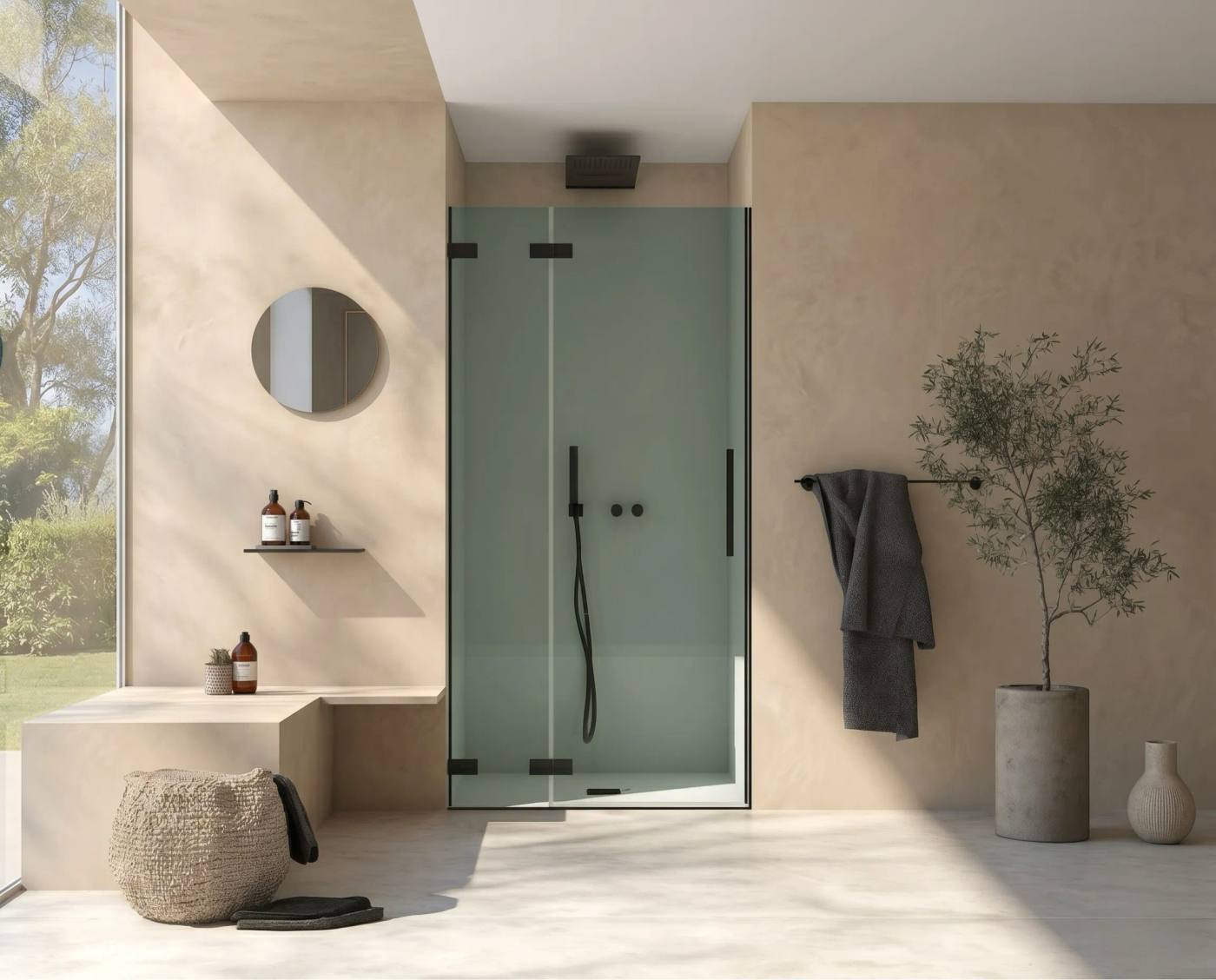
Contemporary minimalist style - Recessed square head, white or cement-grey resin shower tray, low-iron clear glass panels. Nothing superfluous, with all the focus on the water falling from above.
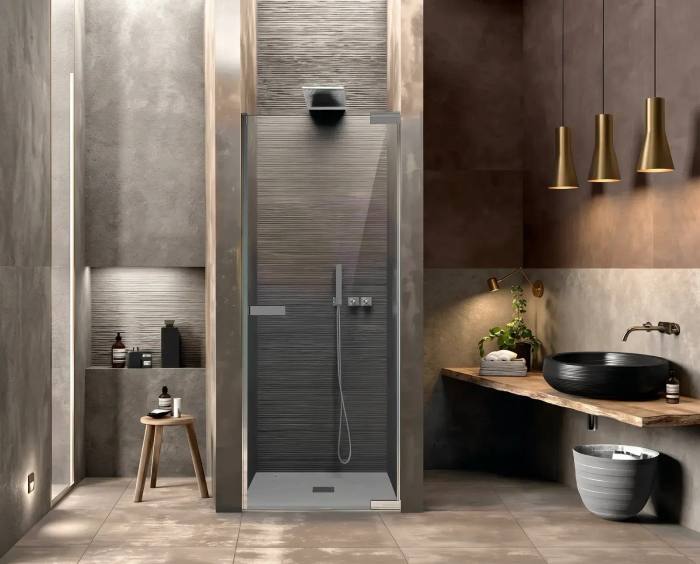
Industrial style - Round head in brushed steel or matt black, paired with an enclosure with anthracite steel profiles and brick-effect or raw-cement tiles.
Home-spa style - A wide ceiling shower head (50x50 cm) with a slow cascade flow, natural stone or marble walls, a recessed shower tray. The aim is to recreate the experience of a wellness centre at home.
Classic-contemporary style - Ceiling head in brushed brass or champagne, with a white ceramic shower tray and sandblasted panels to provide privacy without losing light.
To gather ideas and compare different configurations, the CSA shower enclosure configurator lets you see the pairing of heads, profiles and panels in real time.
Maintenance and limescale
One often-underestimated aspect is the maintenance of the ceiling shower head, especially in hard-water areas. Limescale tends to build up in the outlet nozzles, reducing the flow and altering the spray pattern.
The most practical solutions:
- Heads with flexible silicone nozzles - the limescale simply rubs off with your fingers
- Periodic anti-limescale treatment with white vinegar or dedicated products
- A central water softener - the most effective solution for anyone living in a hard-water area
How much does a ceiling shower head cost?
The cost varies a great deal depending on size, material and features. Basic round or square models, with a diameter between 20 and 30 cm, sit in a band of roughly £50 to £180. Going up in size, a medium head with a 30-40 cm arm comes in at around £130 to £350, while recessed flush models from 30 to 50 cm start at about £260 and can reach £800. The most advanced heads, with LED lighting or thermochromic functions, can exceed £1,300.
On top of these figures there are always the plumbing costs for running the pipework and any building work, which vary considerably with the complexity of the job.
Conclusions
The ceiling shower head is a feature that can noticeably raise the quality of the bathroom, both functionally and aesthetically. The key to success is planning it in advance: an adequate water supply, an enclosure chosen to match and coordinated finishes. If you are planning a renovation or a new bathroom, now is the right time to add it to your list.
To explore the available options, discover the made-to-measure shower enclosures from CSA Box Doccia, with solutions to suit every kind of space, from the small cloakroom to the large master suite.