The Art of the Shower Design & trends
Sensory shower: what it is and how to bring it into your bathroom at home
A sensory shower at home: shower head, lighting, aromas and the right enclosure to hold in warmth and steam. What you need and roughly what it costs.
Anyone who has tried a sensory shower at a spa remembers it well: dense rain falling from above, light that slowly shifts, a scent of eucalyptus arriving with the warmth. Then you get home and your everyday shower feels like something else entirely, quicker and colder.
Much of that experience, though, has nothing to do with the spa itself. It comes down to a handful of elements you can bring into an ordinary bathroom, without turning it into a miniature wellness centre. To have a sensory shower at home you need the right choices on four fronts: water, light, scent and the space that holds it all together.
What is a sensory shower?
A sensory shower is a shower that engages several senses at once. Touch through different water jets, sight through coloured light, smell through aromas, and sometimes hearing with a soft soundtrack. The point isn't to wash faster, but to take a few minutes in which the body slows down.
In wellness centres these showers are often part of a circuit: warm tropical rain, a neck waterfall, a cold mist after the sauna. Each has its own rhythm and temperature, and moving from one to the next is part of the effect.
If someone asks what sensory showers are, the simplest answer is this: showers designed to stimulate the senses, not just to get you clean. That's why you'll also find them described as experience showers or, translating the Italian doccia emozionale, emotional showers. They all mean the same thing.
A sensory shower at home: what you really need
At home there's no need to recreate a spa circuit. Four well-chosen elements are enough, and you don't have to have them all from day one.
The shower head: rain, waterfall and mist
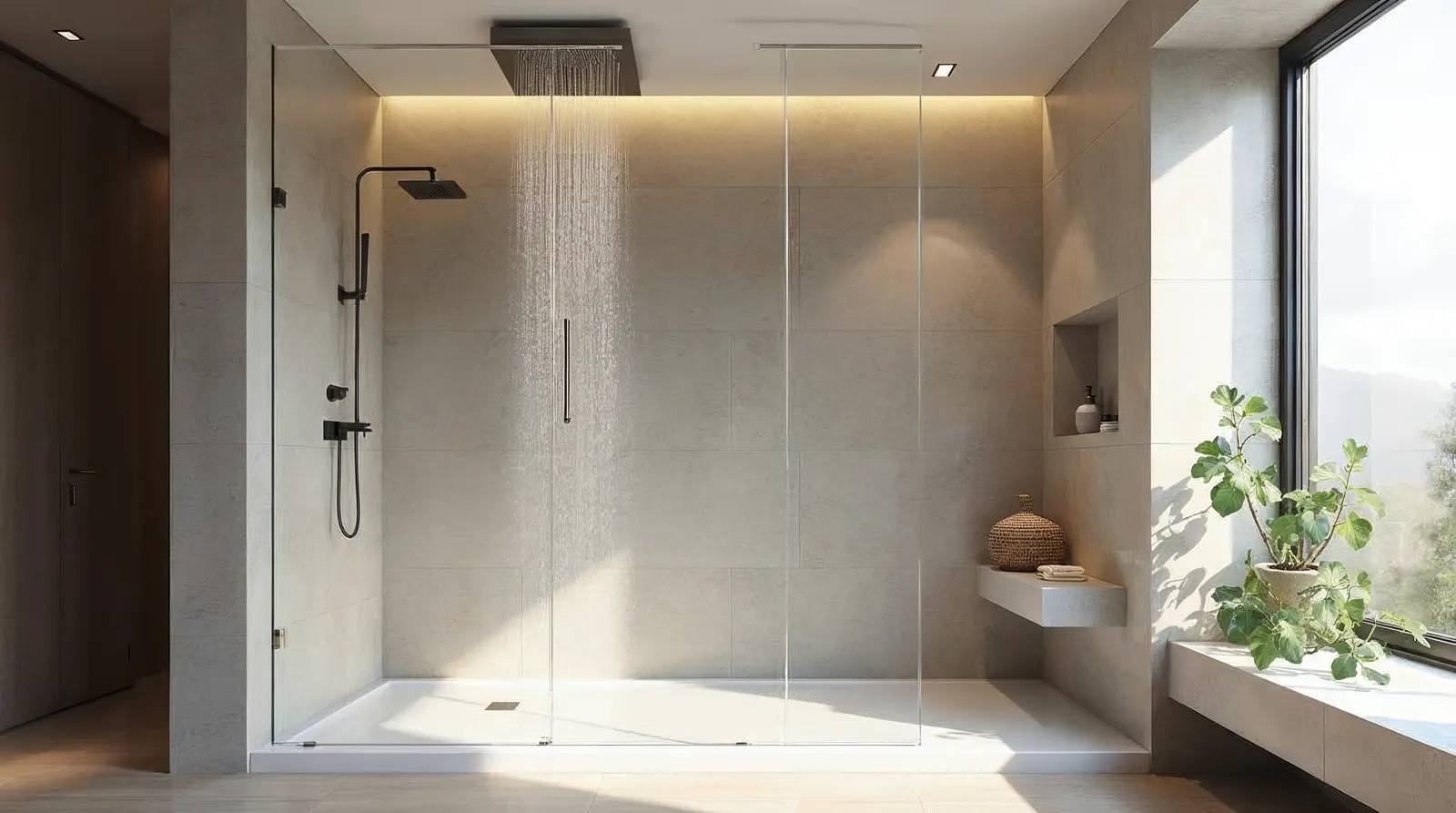
The shower head is the heart of it all. A large ceiling-mounted model lets the water fall vertically over the whole body, like real rain, and that alone is a clear step up from the usual wall-mounted hand shower.
Multi-function shower heads add more jets. The waterfall comes down concentrated on the shoulders and neck, the rain stays soft and diffused, and the mist setting splits the water into very fine droplets that wrap the skin almost like a cloud. Don't confuse mist with steam: it's still water, just atomised.
Sizes, installation types and technical requirements are covered in our guide to the ceiling-mounted shower head. One practical detail to add: a thermostatic mixer keeps the temperature steady even when someone turns on a tap in the kitchen, and a sudden change under the rain shower spoils everything.
Light: colours that change without overdoing it
Light is the element that most changes how a space feels. An LED strip in the shower head or the ceiling, with colours that fade slowly into one another, makes the experience recognisable even with your eyes closed, because you still sense the change.
We've written a dedicated guide on how the colours work and which systems exist in our article on the chromotherapy shower. Here, one rule is enough: any electrical device near water must respect the safety zones set out by the electrical standards for bathrooms (in Italy, CEI 64-8, clearly explained by Impianti News). Where the light goes is always an electrician's call.
Aromas: the sense you remember longest
Scent is the cheapest ingredient and often the one that stays with you most. Eucalyptus and mint in the morning, lavender or cedarwood in the evening. The warmth of the water releases the essential oils and spreads them through the air.
Methods, fragrances and small tricks are collected in our guide to shower aromatherapy. The point that matters here is a different one: aromas only work if they stay where you are, and that depends on the shower enclosure.
Why a closed shower enclosure makes the difference
It's the detail almost everyone underestimates. A sensory shower lives on warmth and on moist, scented air. If the space is open, the steam rises and spreads through the bathroom, the scent is lost within seconds and the enveloping feeling fades.
A closed shower enclosure works like a small room within the room. It holds the warmth of the water, keeps the humidity close to the body and concentrates the aromas. It's the same reason why, in a spa, sensory showers are almost always in cabins or alcoves, never in the middle of a hall.
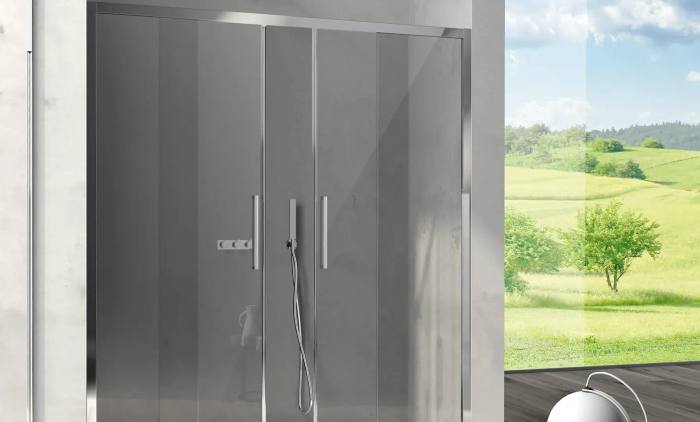
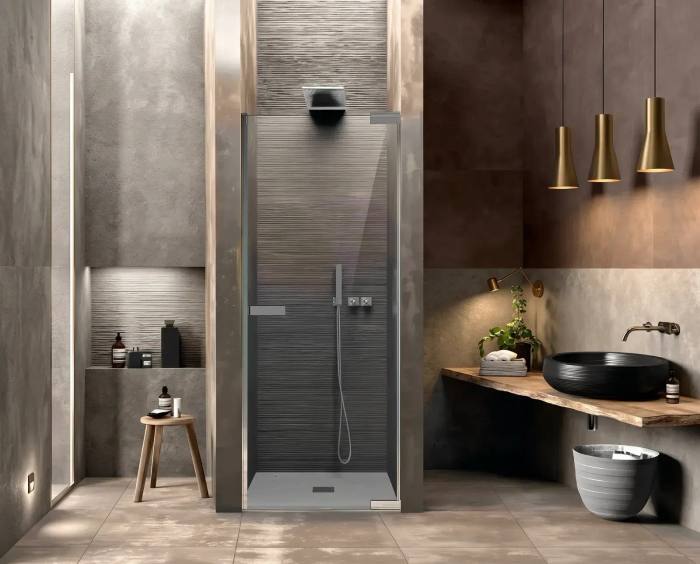
An alcove shower enclosure is the most effective configuration: three sides are already walled and the glass only closes the front, so the heat has very few ways out. If the shower is in a corner, a corner shower enclosure with hinged or sliding doors closes the two open sides well. Open walk-in solutions look great, but for a sensory shower they're the least suitable choice.
An honest clarification: an enclosure of standard height, around 200 centimetres, stays open towards the ceiling. It holds far more heat and steam than an open shower, but it doesn't become a steam room. Real steam requires a cabin sealed up to the ceiling and a dedicated generator, which is a different and more demanding project.
Sensory shower prices: how much it costs to bring one home
The cost of a sensory shower depends on how far you want to go. It makes sense to think in levels, because you can start simple and add pieces over time.
The basic level starts with the shower head. According to the figures in our guide, a round or square ceiling shower head of 20 to 30 centimetres usually costs between 60 and 200 euros, while a medium model on an arm sits between 150 and 400 euros. Adding an aroma diffuser or a few drops of essential oil costs just a few euros more.
The intermediate level involves a larger recessed shower head, between 300 and 900 euros, LED lighting suitable for the shower area and a thermostatic mixer. This is where the experience really starts to resemble a spa.
Integrated systems, with chromotherapy and combined functions managed from a single control, start at around 2,500 euros and often exceed 10,000 euros in top-of-the-range versions.
On top of all this come the shower enclosure and the installation, which vary a lot depending on dimensions, glass and the work required. Every bathroom is different, so a precise figure can only be given after seeing the space.
Sensory showers for the home: three realistic ideas
Sensory showers for the home aren't all the same, and you don't need a huge bathroom to have one.
In a small bathroom with an alcove shower, the simplest route is to replace the hand shower with a ceiling shower head, close the front with a glass enclosure and pick a fragrance for the evening. Modest spending, immediate change.
In a medium-sized bathroom, perhaps with a corner shower, you can go for a multi-function shower head with a mist setting, a warm-light LED strip and a corner enclosure with well-sealed doors. The result is a complete sensory shower without major work on the plumbing.
If instead you're renovating everything, it's the right moment to plan for the recessed shower head, the thermostatic controls and the wiring for light and colour, together with the enclosure. Making these choices before the walls are closed costs much less than adding them later.
Where to start
The first step towards a sensory shower at home is almost always the space: working out whether the shower is in an alcove, in a corner or open, and which enclosure can close it best. Shower head, light and aromas come afterwards and can be added gradually.
If you'd like to know which configuration suits your bathroom, request a quote: we'll help you choose the right enclosure to hold in warmth and steam, and build your sensory shower around it.
FAQ
What's the difference between a sensory shower and an experience shower?
Nothing substantial. Sensory shower, experience shower and emotional shower are different names for the same idea: a shower that engages several senses through jets, light and aromas.
Do I need special plumbing?
Large shower heads need adequate water pressure and flow to work well. Before buying, have a plumber check your system, especially in older homes or on upper floors.
Does a sensory shower use more water?
It depends on the jets. The waterfall uses more than the rain setting, while mist uses very little water. Many recent shower heads also have flow limiters that cut consumption without reducing comfort.
Can a sensory shower be installed in a finished bathroom?
Yes, at least partly. A shower head, aromas and a closed enclosure can be added without demolishing anything. Integrated lights and recessed shower heads, on the other hand, usually require some work on the ceiling or walls.