Disabled shower seat: fixed, fold-down or wall-mounted?
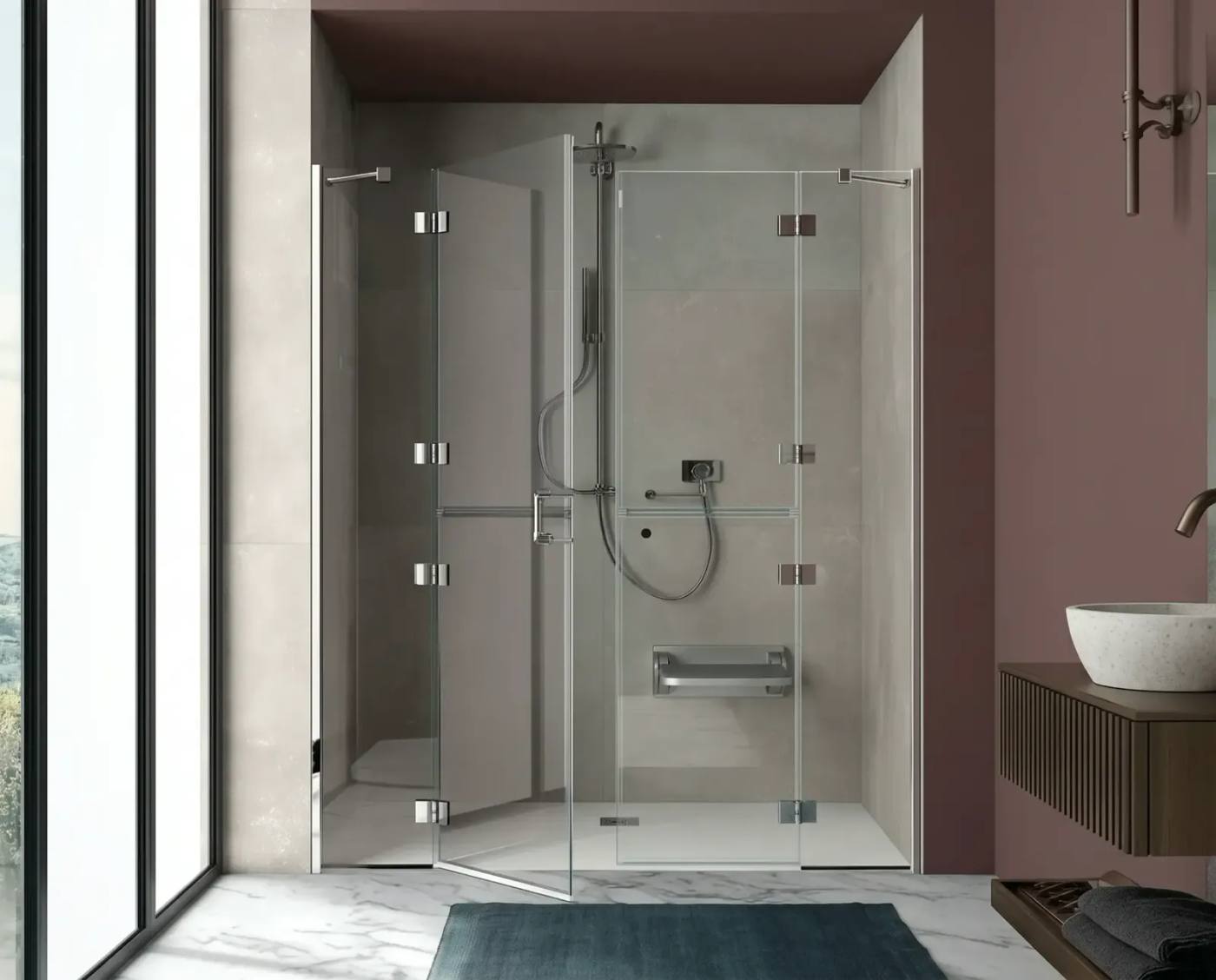
Standing under the shower for five minutes is not something everyone can take for granted. A disabled shower seat is designed precisely for this: it offers a stable place to rest for anyone with balance problems, a prosthesis or a degenerative condition, reduces the risk of falls and gives back independence to people who shower on their own.
The trouble is that online you will find three very different types of disabled shower seat: fixed, fold-down and wall-mounted. Each has strengths and limitations that depend on the space available, how independent the user is and the type of shower enclosure already installed or yet to be fitted. In this guide you will learn how to weigh up the three options, what to look for in terms of materials and load capacity, and when it makes sense to call in an installer rather than fitting everything yourself.
Disabled shower seat: what to know before you choose
A disabled shower seat is not a decorative accessory like a shelf or a soap dish: it is a structural element, designed to bear the weight of a person who sits down and stands up again several times, often with unsteady balance and on wet surfaces. That is why it should be chosen using different criteria from those you would apply to any ordinary accessory.
It should also be kept separate from the broader topic of the accessible shower enclosure, which covers the general features of the enclosure: dimensions, level-access entry, grab rails and the relevant regulations. Here the focus is on the seat alone: how to choose it, where to install it and what load it can take.
The first question to ask is who will use the disabled shower seat and how independently. Someone who sits down and gets up unaided has different needs from someone who needs help from a carer, and this affects both the type of seat and where it should be mounted in relation to the grab rails and shower controls.
Fixed seat: the most stable of the three
The fixed seat is the version of the disabled shower seat that is built into the masonry or the shower tray right from the design stage of the bathroom. It is usually a masonry bench finished in the same material as the floor, or a prefabricated element in resin or engineered stone that is permanently anchored in place.
Its main advantage is stability: there is no mechanism that can give way and no fixing to check periodically. It is the most suitable choice for people with a long-term, stable mobility impairment who already know they will use the seat every day, with no need to free up the space for other uses of the shower.
The drawback is that it requires renovation work: it cannot be added to an existing shower enclosure. It has to be designed together with the tray and the enclosure, which makes this option suitable only for a complete bathroom refit, not for a quick upgrade of an existing enclosure.
Fold-down seat: space when you don’t need it
The fold-down seat is the version of the disabled shower seat that attaches to the wall or to the enclosure profile and folds up when not in use, freeing up the whole shower area. It is the most common choice in shared bathrooms, where not everyone who uses the shower needs a seat.
The folding mechanism is almost always spring- or gas-assisted, designed to support the weight without requiring any effort to lift it. The best models remain stable even halfway through their travel, so people with less strength in their arms can lean on them while lowering or folding them away.
It must be installed on a load-bearing wall or a reinforced profile: a fold-down disabled shower seat fixed to the enclosure’s toughened glass, with no structural support behind it, risks giving way under load. Before choosing this model, it is worth checking what lies behind the wall it will be mounted on.
Fixed wall-mounted seat: the middle ground
Between the fixed masonry seat and the fold-down one there is a third version of the disabled shower seat: the fixed wall-mounted model, securely anchored to the wall but not built into the structure of the bathroom. It does not fold up, but it can also be installed in an existing shower enclosure, with no building work.
It is the most practical choice for anyone who wants the stability of a fixed seat without redoing the bathroom from scratch. Many models on the market are height-adjustable, so the same disabled shower seat can suit different members of the family.
The trade-off is space: unlike the fold-down seat, this model is always there, even when the shower is used by someone who does not need it. In a small enclosure, this needs careful thought before you decide.
Materials and load capacity: what to check before you buy
The material determines both the lifespan and the safety of a disabled shower seat. Stainless steel, particularly AISI 304, is the benchmark for corrosion resistance and load capacity, often exceeding 150 kilograms in professional models. Resin and ABS plastic cost less but should be checked against the technical data sheet: not all versions support the same weight, and some are designed for occasional use only.
The load capacity stated by the manufacturer should never be ignored, and it is the first thing to check, before price or design. A disabled shower seat that is underrated for the weight of its user is a real hazard, not just a matter of comfort.
The seat surface matters as much as the frame material. Perforated or micro-perforated models drain water and dry faster, reducing the risk of slipping compared with a smooth, continuous surface.
Dimensions and height: the reference standards
The recommended height from the floor for a disabled shower seat is around 45 to 50 centimetres, in line with accessibility guidelines for bathrooms. A lower seat makes it harder to stand up, while a higher one can be uncomfortable for people with shorter legs or balance problems when sitting down.
Seat depth, usually between 35 and 45 centimetres, should be chosen according to the free space in the enclosure and the build of the person using it. For the minimum enclosure dimensions, the reference remains CSA’s complete guide to accessible showers; for the Italian tax deductions linked to accessibility work, you will find full details in our guide to Italy’s bathroom renovation bonus.
Installation: why you should use a professional
Fitting a disabled shower seat, especially fold-down or fixed wall-mounted models, means locating the correct anchor points behind the wall or the enclosure profile. A makeshift fixing, perhaps with wall plugs unsuited to the type of wall, can give way at exactly the moment when stability matters most.
If the shower enclosure has toughened glass panels, the same rule applies as for lighter shower enclosure accessories such as shelves and soap dishes: drilling the glass is hardly ever a good idea, and in many cases it voids the panel’s warranty. The seat must be anchored to the profile, to a masonry wall or to a structure designed to bear weight, never to the glass.
That is why, unlike a shelf, installing a disabled shower seat is one of those cases where it is worth hiring a professional installer rather than doing it yourself: if it gives way, what is at stake is the safety of the person who uses it every day.
How to choose the right disabled shower seat for your bathroom
Before deciding, it is worth checking these points:
- the level of independence of the person who will use the disabled shower seat, and whether a carer’s help is also needed
- the space available in the enclosure, to work out whether a fold-down seat is the better option or whether a fixed or wall-mounted one will work
- the structure behind the wall or the enclosure profile, to check where it can be safely anchored
- the load capacity stated by the manufacturer, which must always exceed the user’s weight
- the material, with stainless steel preferred for everyday use
The right disabled shower seat is one that works with your chosen shower enclosure, not a makeshift add-on. If you are also considering the enclosure itself, CSA’s range of accessible shower enclosures includes models designed for accessibility from the outset, ready to take the seat that best suits your needs.
FAQ
What is the minimum recommended load capacity for a disabled shower seat?
For daily use by an adult, the manufacturer’s stated load capacity should be at least 130 kilograms. Professional stainless steel models often exceed 150 kilograms.
Can a fold-down disabled shower seat be installed on any wall?
No. You need a load-bearing wall or a reinforced profile behind the fixing point. On plain plasterboard or on the enclosure glass the risk of failure is high: always check the structure before installation.
Is a fixed or fold-down disabled shower seat better in a shared bathroom?
In most shared bathrooms the fold-down seat is the most practical choice because it frees up space when it is not needed. A fixed seat only makes sense if the shower is almost always used by the same person who needs to sit down.