The Art of the Shower Guides & advice
Is a Walk-in Shower Cold? Solutions for Thermal Comfort in Winter
A walk-in shower is not cold by nature; the chill comes from heat and steam escaping into the room. Here is how the right glass length, tray material and heating keep an open shower warm and inviting all winter.
Choosing an open shower is a move towards a modern, minimal look, but we know the question that troubles anyone about to renovate a bathroom: is a walk-in shower cold? It is a fair worry, one we at CSA Box Doccia deal with every day alongside our clients. The sense of freedom that comes from having no doors is priceless, but it should never come at the expense of thermal comfort, especially when the temperature outside drops.
In this article we will explore every aspect of comfort under the water, explaining why an open shower can sometimes feel chilly and, above all, how to design a space that stays as warm and welcoming as a hug.
Why do people think a walk-in shower is cold?
To understand how to solve the problem, we first need to look at the physics of our bathroom. When we use an enclosed cubicle, the water vapour stays trapped in a small volume, saturating the air and quickly raising the temperature. In an open layout, by contrast, the heat tends to disperse into the rest of the room. People often say a walk-in shower feels cold precisely because tiny draughts form: warm air rises and draws in cooler air from below or from the open sides of the tray.
It is not a fault of the product itself, but a dynamic of airflow. If your walk-in shower feels cold, there is probably an imbalance between the size of the protective glass panel and the volume of air moving through the room. We work to cancel out that imbalance through bespoke design.
The secret is in the dimensions: when a walk-in shower feels cold through miscalculation
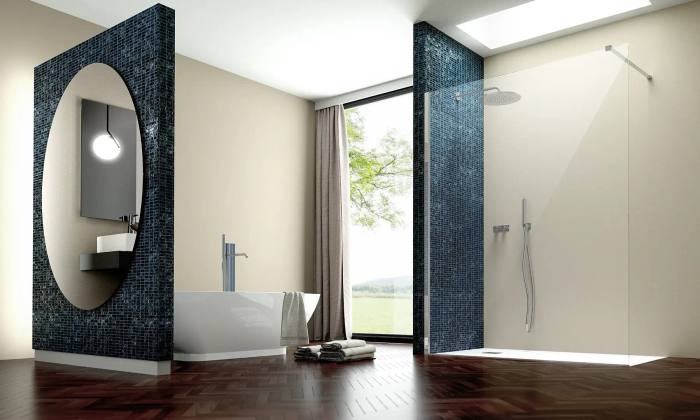
One of the most common mistakes lies in the proportions. Many people fear that a walk-in shower will be cold because they have seen installations with panels that are too short. To guarantee a pleasant microclimate, the fixed glass panel must be long enough to shield the body and hold back some of the steam.
If the panel is shorter than 120 centimetres, the chance of feeling draughts rises sharply. In these cases, the sense that the shower is cold becomes an irritating reality. We always recommend assessing the available space carefully: a generous glass wall is not only better to look at, it also acts as an essential thermal shield against heat loss.
Technical solutions to stop a walk-in shower feeling cold
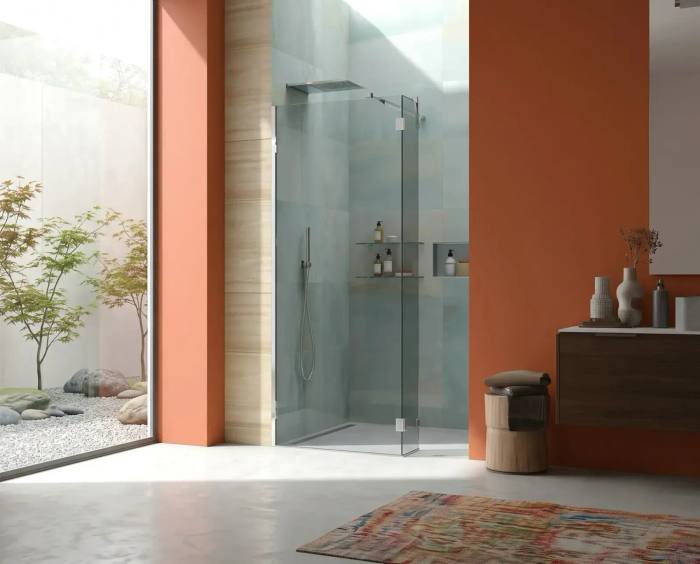
There are several strategies for turning the bathroom into a comfortable space. If you are worried that your walk-in shower will feel chilly, you might consider installing a "deflector". This is a small hinged panel, usually 30 or 40 centimetres wide, that fixes onto the fixed glass. While you shower, it can be partially closed to block the airflow, instantly solving the complaint of anyone who finds an open shower draughty.
Another crucial element is the shower head. When a walk-in shower feels cold, the choice of water jet can make all the difference. Large rainfall shower heads, mounted on the ceiling or on a substantial arm, warm the surrounding air more evenly than a small, concentrated jet. The wider the area covered by warm water, the less you will notice the difference in temperature with the rest of the room.
Comfort starts at your feet: the tray and the materials
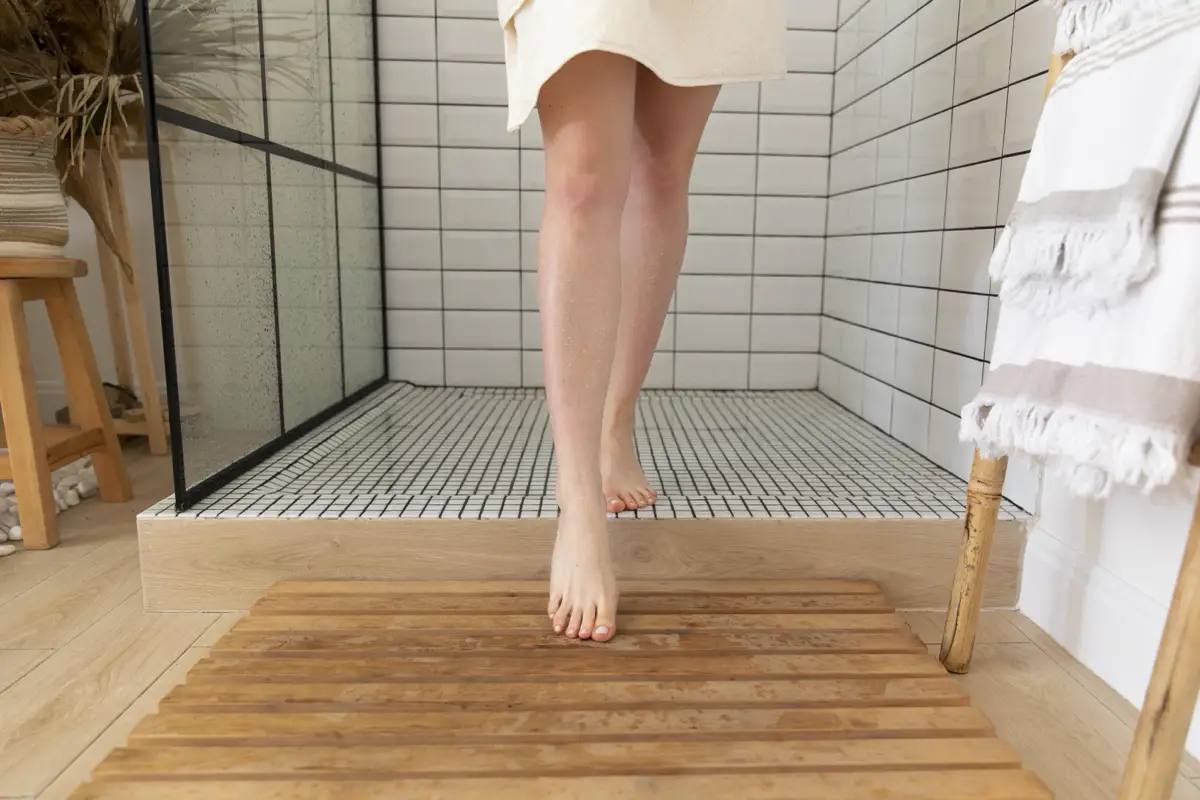
We often underestimate the sense of touch. Many people decide a walk-in shower is cold based on the first feel of their feet on the tray. Traditional ceramic is a cold material that takes time to warm up. That is why we suggest using resin trays or mineral composite materials. These materials have a surface temperature closer to body heat and hold the warmth of the water better, removing that unpleasant initial shiver that makes people think an open shower is cold.
What is more, if you are renovating from scratch, the ideal pairing is underfloor heating. Having the coils running right beneath the shower area is the definitive answer for anyone who fears a cold walk-in, since the heat rises from below and wraps around you before you have even turned on the mixer.
Positioning the heating and the ventilation
A great design strategy involves looking beyond the glass. If your shower feels cold, where is your heated towel rail? Placing a powerful heated towel rail right in front of the shower opening creates a wall of warm air that counters incoming draughts. Having a warm towel within reach the moment you finish showering also dramatically reduces the temperature shock.
Watch out for forced ventilation too. If you have an extractor fan right above the shower head, it will whisk away the warm steam immediately, making you feel that the shower is cold. Adjust the ventilation so it is effective but not too aggressive during the minutes you spend under the water.
The comfort of a walk-in shower
Today, many people look for quick answers online and wonder whether a walk-in shower really is cold. To sum up the key points that make this solution comfortable, we should remember that thermal comfort is the sum of glass design, shower head choice and bathroom heating. An open shower is not inherently freezing; it only becomes so if airflow management is overlooked.
In short, the idea that a walk-in shower is cold is a myth that technical know-how can dispel. At CSA Box Doccia we rely on thick tempered glass (8mm or 10mm), which has greater thermal inertia than cheaper glass, helping to keep the area warm for longer.
Final thoughts before you buy
In conclusion, if your fear is that a walk-in shower will be cold, the answer is not to give up this beautiful design feature, but to rely on people who know how to balance aesthetics and function. Do not let the worry push you towards a traditional enclosure if what you really want is an airy, modern bathroom.
With the right precautions, such as a correctly sized panel, a resin tray and clever positioning of the heated towel rail, you will discover that the pleasure of an open shower is second to none, even in the depths of winter. If your current walk-in feels cold, try adding a small deflector or improving the heating in the room: small changes can make a big difference.
We are convinced that quality of life runs through these details too. Do not let the notion of a cold shower limit your creativity. With the right touches, your bathroom will become the warmest and best-loved room in the house.
Ready to design your own oasis of wellbeing without giving up the warmth? Get in touch to discover our range of walk-in panels and receive advice tailored to your space. We will help you find the ideal configuration so you never have to wonder again whether your walk-in shower is cold.