Overlaying a Shower Tray: Renovate Your Bathroom Without Tearing Up the Floor
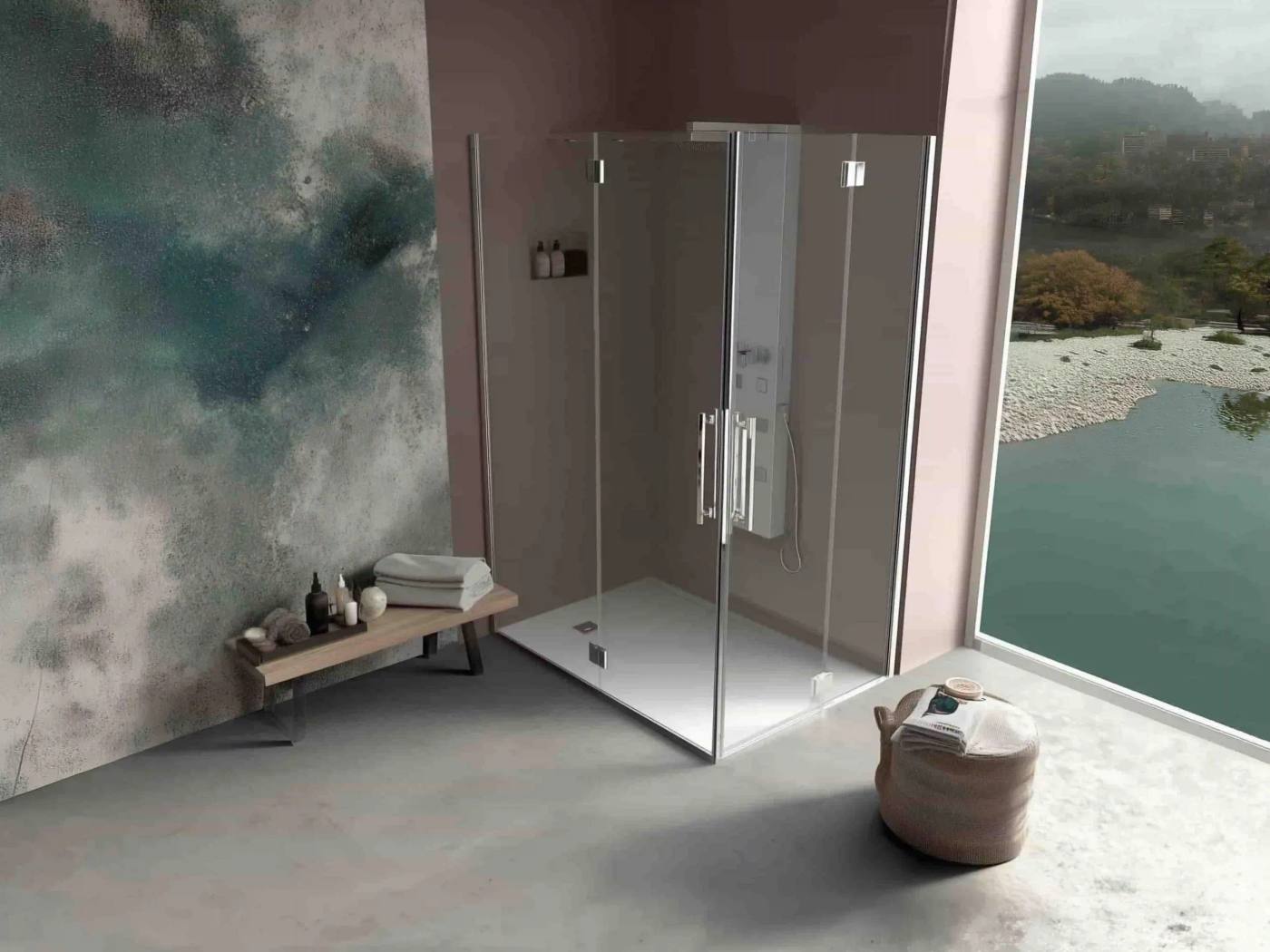
Changing a shower tray without opening up the floor is not a compromise. It is a deliberate choice, one that more and more people make when they want to refresh the bathroom without turning it into a building site. Shower tray overlaying is a well-established technique, quick and, when carried out with the right materials, capable of delivering aesthetically flawless results.
If you are weighing up this route, it is worth understanding how it really works, when it makes sense, and what sets a job done well apart from one that causes problems a few months down the line.
What shower tray overlaying actually is
Shower tray overlaying means fitting a new tray directly over the existing one, without removing it and without breaking up the substrate it sits in. The new tray is fixed with silicone or specific adhesives, then reconnected to the existing waste via a connector.
It is a solution born from the need to cut the time and cost of a bathroom refit. But it is not just a question of money: avoiding demolition also means avoiding dust, noise, days without a usable bathroom and, often, the need to redo all the surrounding tiling.
The result, when the work is done properly, is a refreshed bathroom that visually betrays no sign of the old fitting underneath.
When shower tray overlaying is the right choice
There is no universal answer. Shower tray overlaying makes sense when certain conditions are met.
The existing tray must be sound: no deep cracks, no dips, no areas where the substrate is giving way. If the base is not solid, laying a new tray over it does not fix the problem, it merely hides it for a while.
The waste must be accessible and in good condition. Shower tray overlaying is not a fix for unresolved drainage problems: the connection between the new tray and the existing waste only works if the pipework is clean and regular.
Height is a factor to consider. A tray laid over another adds a few centimetres of level compared with the surrounding floor. This is not always a problem, but if the bathroom is intended for older people or those with reduced mobility, even a minimal step can become an obstacle.
When all these conditions are favourable, shower tray overlaying is a practical, fast solution with an excellent balance between cost and result.
The materials: acrylic, resin, ceramic
Shower tray overlaying can be carried out with various materials, each with its own characteristics.
Reinforced acrylic: this is the material most used for this type of job. Lightweight, impact-resistant, available in many sizes and colours. The surface is warm to the touch, easy to clean, and stands up well to intensive daily use. The cost is accessible.
Mineral resin: this offers a superior finish. The surface is denser, quieter under running water, with a matt or satin finish that comes very close to the look of designer bathrooms. It weighs more than acrylic, but copes admirably with overlaying even in extra-large formats.
Ceramic and porcelain stoneware: less common in direct overlaying because of their weight, but available in ultra-thin solutions designed precisely for this kind of installation. The advantage is maximum visual compatibility with existing floors and walls.
The choice of material comes down to three factors: budget, the look you want and the load the existing tray can bear. An experienced consultant can guide that assessment in a matter of minutes.
How it is installed: the stages of the work
Shower tray overlaying is not a job for anyone wanting to improvise. The main stages are these:
Surface preparation: the old tray is thoroughly cleaned, degreased and, if necessary, sanded down where it stands proud. Any irregularity in the base transfers to the new tray, so this stage must not be skimped.
Waste connection: the existing grille is removed and a specific overlay connector is fitted, linking the new waste to the one already in the pipework. This is the most technical step, the one that measures the quality of the installer.
Positioning and fixing: the new tray is laid, checked with a spirit level, and fixed with specific adhesive or professional silicone. The fixing must be even across the whole surface to avoid flexing during use.
Perimeter sealing: the edge between the tray and the surrounding walls or tiles is sealed with sanitary silicone, to prevent water ingress.
Done correctly, the entire shower tray overlaying job is completed in half a day. The bathroom is usable again within hours.
Shower tray overlaying: how long it lasts
One of the most frequent questions concerns durability over time. The answer depends on the quality of the materials used and the execution of the work.
A mineral resin tray laid on a solid base, with a waste connection carried out to a high standard and a well-made perimeter seal, lasts as long as a tray installed the traditional way. Ten, fifteen, twenty years without problems, provided the bathroom is used normally and cleaned with suitable products.
The problems encountered with shower tray overlaying are almost always down to one of these factors: an unlevel base, a poorly connected waste, low-quality silicone that cracks over time and lets moisture in. None of these is an inherent flaw in the technique: they are mistakes avoided by choosing someone who does the job with care.
What overlaying cannot do
There has to be some honesty on this point. Shower tray overlaying does not solve everything.
If the current tray has suffered structural damage, if the floor beneath has softened due to earlier leaks, if the waste has flow problems: in these cases demolition and a complete refit remain the only viable route. Hiding a problem is never a solution.
In the same way, if the goal is to radically transform the bathroom layout (move the waste, change the dimensions of the shower, reposition enclosure and panels), shower tray overlaying is not the right tool. A more extensive project is needed.
But when the conditions are right, shower tray overlaying is a clean, fast solution, with a visual impact that satisfies even the most demanding eye.
Overlaying the tray and the enclosure: the complete project
Those who opt for shower tray overlaying often do so as part of a broader enclosure renovation. New tray, new profiles, new glass panels. The advantage of this approach is that the work remains non-invasive, because the enclosure is mounted on the newly laid tray without touching the tiles or load-bearing walls.
The combination of a mineral resin tray with a toughened glass enclosure and aluminium profiles in a black or brushed-steel finish is one of the most requested today. It works in modern bathrooms, in industrial styles, in spaces built around simplicity.
For anyone wanting a refreshed bathroom without a building site, this is the combination that offers the best result with the least impact on daily life.
Prices and realistic expectations
Putting a fixed price on shower tray overlaying is difficult, because it depends on too many factors: the size of the tray, the material chosen, the condition of the existing setup, the cost of labour in your area.
As a general rule, shower tray overlaying costs noticeably less than a traditional replacement with demolition. The saving comes from eliminating the cost of the breaking-out work, the removal of debris, the rebuilding of the substrate and often part of the tiling too.
An accurate quote requires a site visit, or at least an assessment of photos and measurements of the bathroom. Only then can a figure that means anything be given.
Why rely on people who know the product
Shower tray overlaying seems simple. And in some ways it is. But the line between a job done well and one that causes problems lies in the details: choosing the right waste connector, the type of adhesive compatible with both surfaces, managing the millimetres of level difference, the seal that does not give way over time.
People who work with shower enclosures and trays every day know where these details hide. They know how to choose the material best suited to the specific situation. They know what to ask before starting and what to check along the way.
Relying on this experience is not a matter of blind trust: it is simply the most direct way to get a result that lasts.
Contact the CSA Box Doccia experts
If you are considering shower tray overlaying for your bathroom, the starting point is a consultation with someone who can see the real situation and give you a concrete steer.
The CSA Box Doccia team works on installations, renovations and replacements every day. They know the products, they know the most common situations and the more unusual ones, and they can help you work out whether overlaying is the right route for you or whether another one makes more sense.
Contact the CSA Box Doccia experts and describe your situation. You will get a clear answer, with no beating about the bush.


