Stainless steel or aluminium shower enclosure: key differences
Choosing between a stainless steel or aluminium shower enclosure is a decision that goes far beyond looks. The profiles of a shower enclosure carry the weight of the glass, withstand humidity and limescale every day and determine how long the whole structure will last. At CSA Box Doccia we manufacture both ranges, in steel and in aluminium, which allows us to offer an impartial technical comparison without having to promote one material at the expense of the other. In this article we compare stainless steel and aluminium shower enclosures in terms of surface treatments, weight, cost, corrosion resistance and maintenance, to help you work out which solution best suits the needs of your bathroom.
AISI 304 stainless steel: passivation as a guarantee of durability
When comparing a stainless steel or aluminium shower enclosure, the first thing to consider is the surface treatment that protects the metal from corrosion. The stainless steel profiles used by CSA are made from AISI 304, the most widely used alloy in the bathroom sector thanks to its balance of mechanical strength and chemical resistance. Stainless steel needs no additional coatings because its corrosion resistance comes from passivation, a chemical process that forms an extremely thin layer of chromium oxide on the surface. This layer regenerates spontaneously on contact with oxygen, even after small scratches, keeping the protection intact for decades. That is why stainless steel shower enclosures, such as the models in our alcove range, keep their original shine even after years of exposure to hard water and cleaning products.
Aluminium: anodising and powder coating compared
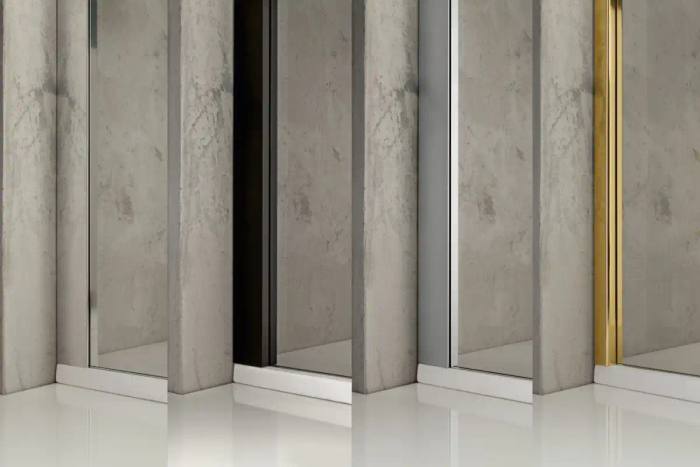
On the other side of the stainless steel versus aluminium comparison is aluminium, a material that owes its durability to a surface treatment applied at a later stage. The CSA aluminium collection mainly uses two finishing techniques: anodising and coating. Anodising is an electrochemical process that oxidises the surface of the profile in a controlled way, creating a hard, compact layer of aluminium oxide that protects the underlying metal from bathroom humidity. Coating, often powder coating, offers a wider range of profile colours and finishes, from matt white to matt black, but its effectiveness depends entirely on the quality of application: a cheap coating can chip or blister over time if exposed to aggressive cleaning products. That is why, when weighing up a stainless steel or aluminium shower enclosure, the quality of the aluminium’s surface treatment matters as much as the choice of material itself.
Weight and handling: two structures compared
One of the aspects that clearly sets stainless steel and aluminium shower enclosures apart is the weight of the structure. Steel has a density of around 7.85 grams per cubic centimetre, while aluminium stops at around 2.7 grams per cubic centimetre, almost a third. This means that, for the same profile cross-section, an aluminium shower enclosure is considerably lighter than its stainless steel equivalent. The advantage translates into easier handling during transport and installation, a factor not to be underestimated for large walk-in showers or corner configurations with sliding doors, where lighter profiles reduce the strain on the sliding systems and bearings. Stainless steel, being heavier, offers superior structural rigidity in return, particularly valued in installations with large hinged doors or in contract projects where robustness is a top priority.
Production cost and final price
Cost is also part of the stainless steel versus aluminium shower enclosure comparison. Thanks to simpler processing and lower raw material costs, aluminium generally makes it possible to produce shower enclosures at a lower final price, while still maintaining an excellent level of quality when the surface treatment is carried out correctly. AISI 304 stainless steel, on the other hand, requires more complex processing and a more expensive raw material, which is reflected in a generally higher list price. This cost difference should not, however, be read as a judgement on quality: rather, it means that stainless steel is positioned as a premium solution for those seeking maximum long-term durability, while aluminium is an excellent compromise between performance, looks and budget. It’s worth remembering that the price of a profile is not the only item to consider when calculating the overall cost: the glass thickness, the sliding system chosen and the configuration (alcove, corner or walk-in) also affect the final quote. That is why we always recommend requesting a personalised quote that takes into account both the profile material and the actual dimensions of the shower space, so that the two solutions can be compared fairly on the same technical and economic basis.
Corrosion resistance in humid environments
In the comparison between a stainless steel or aluminium shower enclosure, corrosion resistance deserves a closer look, because the bathroom is by definition a constantly humid environment. AISI 304 stainless steel retains its properties even with very hard water and continuous steam, without the treatment losing effectiveness over time, precisely because passivation is an intrinsic property of the material rather than an applied coating. Anodised aluminium still offers excellent corrosion resistance, comparable to steel in most domestic settings, provided the oxide layer is not damaged by aggressive chemicals or abrasives during cleaning. The difference shows above all in particularly demanding environments, such as showers for the marine sector or for spa resorts, where CSA has always favoured stainless steel precisely for its long-term stability.
Everyday maintenance: cleaning and lifespan of the profiles
Maintenance is the final piece of the stainless steel versus aluminium shower enclosure comparison, but it is the one customers experience every day. Stainless steel profiles with a polished or brushed finish need regular cleaning to prevent limescale build-up, but they are not afraid of surface scratches thanks to the self-regenerating protective layer. Anodised aluminium profiles are easy to clean with a soft cloth and a neutral detergent, while coated finishes need more care, avoiding abrasive sponges that could damage the paint layer. In both cases, the anti-limescale treatment that CSA applies to its glass considerably reduces how often cleaning is needed, an aspect that rounds off the technical assessment of a stainless steel or aluminium shower enclosure regardless of the profile material chosen.
Stainless steel or aluminium shower enclosure: which to choose for your bathroom
The choice between a stainless steel or aluminium shower enclosure ultimately depends on the context of use and your personal priorities. If you are looking for maximum structural strength, long-lasting performance without compromise and an investment designed to last for decades, the AISI 304 stainless steel of our alcove, corner and walk-in collections is the most solid choice. If, on the other hand, you prioritise lightness, more affordable value for money and a wide choice of colours among the finishes available in the aluminium collections, the anodised or coated aluminium range perfectly meets the needs of a modern, functional bathroom. To help you choose your profiles, you may find it useful to read our guide to shower enclosure profiles and our in-depth article on shower enclosure tracks, where we analyse in detail the sliding systems and materials used by CSA as a shower enclosure manufacturer.
FAQ
What is the main difference between a stainless steel and an aluminium shower enclosure?
The main difference lies in the surface treatment: AISI 304 stainless steel protects itself through passivation, while aluminium needs anodising or coating applied during production.
Will a stainless steel or aluminium shower enclosure rust over time?
No, provided the surface treatment has been carried out correctly. AISI 304 stainless steel does not rust thanks to natural passivation, while anodised aluminium resists corrosion as long as the oxide layer remains intact.
How much more does a stainless steel shower enclosure cost than an aluminium one?
The difference depends on the model and size, but AISI 304 stainless steel generally costs more than aluminium, because of the raw material and the more complex processing involved.
How do you clean the profiles of a stainless steel or aluminium shower enclosure?
A soft cloth and a neutral detergent are all you need for both materials; avoid abrasive sponges on coated finishes and clean regularly to prevent limescale build-up.
An impartial comparison, backed by CSA
Choosing between a stainless steel or aluminium shower enclosure doesn’t mean choosing the best material in absolute terms, but the one best suited to your bathroom, your lifestyle and your budget. Because CSA Box Doccia designs and manufactures both ranges in its own factories, as a shower enclosure manufacturer we can offer you genuinely impartial advice, based on the real technical characteristics of the materials and not on the convenience of selling one range rather than the other. Whether you choose the timeless elegance of stainless steel or the practical lightness of aluminium, the quality of CSA craftsmanship remains the same. Our technicians are available for a site survey or a personalised consultation, so that together we can identify the configuration, finishes and opening system best suited to your bathroom, for a result that combines looks, functionality and long-term durability.