Bath and Shower in One: Choosing the Ideal Over-Bath Shower Screen

The bathroom is not simply a functional room but the true beating heart of well-being at home. At CSA Box Doccia, we work every day with one aim: to make this space practical, elegant and able to keep up with the hectic pace of modern life. We often meet customers who love the relaxation of a warm bath but need the speed and convenience of a shower. The question comes up naturally: is it possible to have both without overhauling the room? Absolutely.
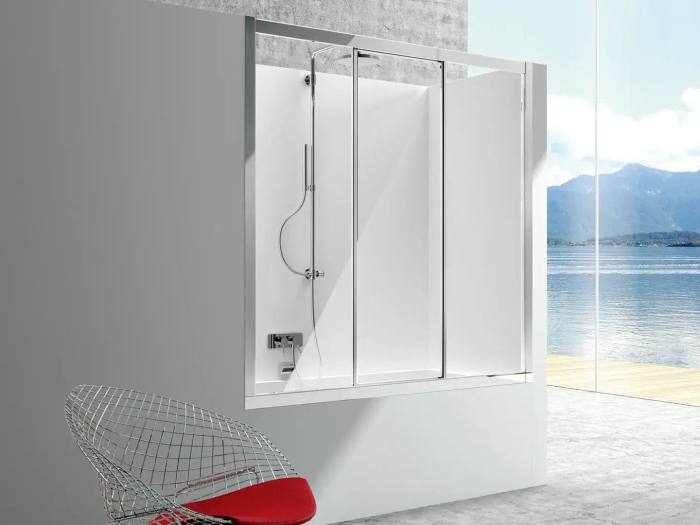
The answer lies in fitting an over-bath shower screen. This clever architectural solution lets you turn your traditional bath into a spacious, high-performing shower space, without giving up the chance to soak in the water whenever you like. In this article we will explore how this choice can enhance your bathroom, looking at materials, types and concrete benefits.
Two functions, zero compromise: the real benefits
Why should you consider this installation? Many people still associate showering in the bath with old plastic curtains: unattractive, hard to clean and not very effective at keeping the water in. At CSA we believe your bathroom deserves better.
Choosing a professionally designed over-bath shower screen brings immediate benefits that go well beyond looks alone:
- Safety and a proper seal: unlike curtains, a rigid structure keeps the water strictly inside the bath, preventing dangerous slips on a wet floor.
- Better hygiene: tempered glass and aluminium do not encourage bacterial growth and are extremely easy to keep clean.
- Light and space: a clear-glass over-bath shower screen lets light through, making the bathroom feel larger and airier than opaque barriers.
- Added property value: a bathroom with an elegant glass bath screen is perceived as a higher-quality space than one with makeshift solutions.
Fitting an over-bath shower screen is therefore a smart investment that improves the everyday quality of life for the whole family, combining the useful with the pleasurable.
An overview of the types: fixed or moving bath screen?
The CSA Box Doccia catalogue is extensive because we know every bathroom has its own geometry. There is no one-size-fits-all solution, which is why we offer several bath screen configurations. Let us look at the main ones to help you choose.
The elegance of the fixed panel
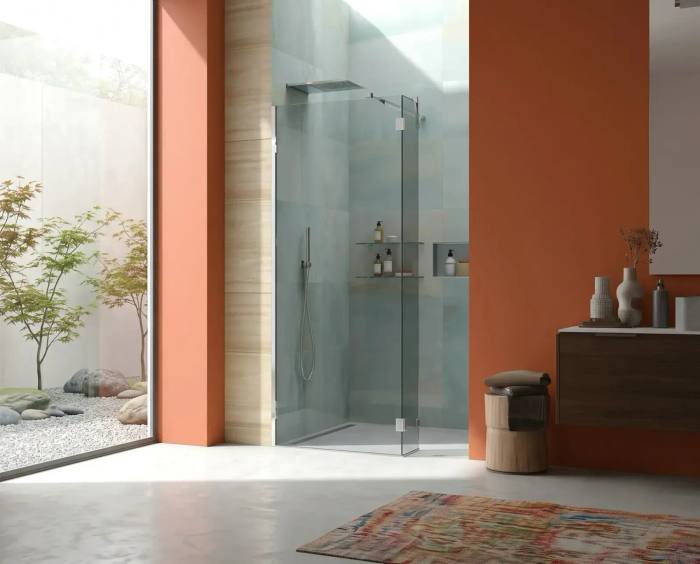
If you love minimalist design, the fixed panel is the natural choice. It is a single glass panel anchored to the wall and sealed to the edge of the bath. There are no moving parts, hinges or sliding seals to wear out. It is the perfect solution for anyone who wants an over-bath shower screen that is almost invisible, protecting the tap area from direct splashes without weighing down the look.
The convenience of hinged openings
For those who want easier access or need to clean the bath in great comfort, hinged-door models are ideal. The door can rotate (often up to 180 degrees), letting you fold the glass against the wall when it is not needed. Our hinged over-bath shower screen comes with specific under-door seals to guarantee a tight seal even as it moves.
Folding concertina solutions
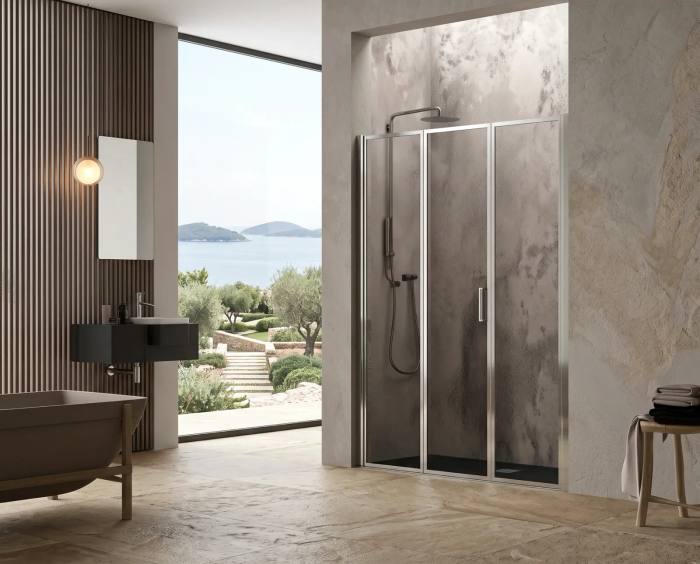
For small bathrooms or baths set into an alcove, the concertina over-bath screen is unbeatable. The panels fold one onto the other, reducing the footprint to a minimum. This is often the favourite solution for families with children, as it frees up the bath completely for playtime and then folds back to give adults a practical over-bath shower screen.
Materials and finishes: CSA Box Doccia quality
When it comes to bathroom furnishing, the quality of the materials makes the difference between a product that lasts a year and one that lasts a lifetime. At CSA, the selection of raw materials is rigorous.
For the profiles on our products we use high-quality anodised or painted aluminium. This ensures your over-bath shower screen does not suffer from oxidation or flaking caused by constant humidity. The finishes range from the classic, ever-elegant polished chrome, to matt white, through to matt black, much in demand in industrial or contemporary-style bathrooms.
The real star, however, is the glass. Every over-bath shower screen we make is fitted with safety tempered glass. The thickness usually ranges from 6mm to 8mm, ensuring stability and strength. To learn more about the technical features and the differences between the various types of glass we use (clear, frosted or screen-printed), we invite you to read our dedicated article on the glass for CSA baths, where we explain in detail why choosing the right material is fundamental to safety.
Refreshing without demolishing: the visual impact
One of the biggest worries when upgrading a bathroom is the building site: dust, noise, broken tiles. The beauty of fitting an over-bath screen is that it is a "dry" job.
There is no need to knock down walls or replace pipework. Installation involves drilling the tiles (or, in some particular cases, using specific adhesives) to fix the profiles to the wall. In just a few hours, an anonymous bath is transformed into a modern over-bath shower.
This kind of work is also perfect for those renting who want to improve the bathroom without permanent structural changes that require complex permissions. What is more, aesthetically, a well-chosen over-bath shower screen can become the focal point of the room, adding verticality and reflections of light that enrich the space.
How to measure for your over-bath shower screen
Precision is everything. To order the right model, or to request a quote from our technical office, you need accurate measurements. Here is how we recommend going about taking the dimensions for your future over-bath shower screen:
- Check whether the walls are "out of square": walls are almost never perfectly straight. Use a spirit level to check the verticality of the wall the profile will be fixed to.
- Measure the length: measure the distance from the wall to the point where you want the glass to reach. If the bath is in an alcove (closed between three walls), measure the wall-to-wall distance at three different heights: at the bath edge, at 150 cm and at 200 cm.
- Glass height: bear in mind that a standard over-bath shower screen is around 140-150 cm tall. Adding that to the height of the bath (usually 55 cm) takes you to roughly 2 metres from the floor. Check there are no obstacles such as windows, towel rails or wall units that could interfere with the doors opening.
If you have a corner bath or one with an unusual shape, there is no need to worry: at CSA we specialise in made-to-measure and can create the perfect over-bath shower screen for any shape.
Maintenance and cleaning: tips from the expert
To keep your new bath screen sparkling, consistency is the best weapon. Limescale is glass's natural enemy, but with a few small habits you can win the battle.
We strongly recommend using a squeegee after every shower. Removing the water droplets before they evaporate prevents the white limescale marks from forming. For the weekly clean of your over-bath shower screen, use neutral or citric-acid-based cleaners. We advise against products that are too harsh or abrasive sponges, which could damage the shine of the aluminium profiles or scratch the glass.
Many of our models can be ordered with a preventive anti-limescale treatment applied at the factory: a technology that makes the glass water-repellent, letting the water slide off much faster.
Why choose CSA's Made in Italy
In a market flooded with low-cost imported products, at CSA we continue to back Italian manufacturing with pride. Buying an over-bath shower screen by CSA means having certainty about where the materials come from and the guarantee of genuine after-sales support.
Our bath screens are tested to withstand intensive opening and closing cycles. The availability of spare parts is also a crucial factor that is often underestimated: in 5 or 10 years, if you need a new magnetic seal for your over-bath shower screen, we will be able to supply it. Those who buy anonymous products often find themselves forced to replace the whole screen because of a missing small spare part.
Solutions for small and awkward bathrooms
You often ask us how to handle very small bathrooms where the bath takes up most of the space. In these cases, the over-bath screen is a lifesaver. Unlike a traditional shower enclosure that needs dedicated entry space, the over-bath system makes use of the area that is already there.
We have installed ingenious solutions in loft conversions with sloping roofs, shaping the glass of the over-bath shower screen to follow the pitch of the ceiling. We have handled situations with half-height walls or taps positioned in unusual spots. Our experience teaches us that there is no technical problem that cannot be solved with good design.
It is time to transform your bathroom
Do not settle for half-measures. Combining the pleasure of a bath with the practicality of a shower is possible, and it can be aesthetically rewarding. By fitting a quality over-bath shower screen, you will give your bathroom new life, increasing both its functionality and its value.
At CSA Box Doccia we put passion into every detail, from choosing the smallest screw to finishing the largest pane of glass. We hope this overview has helped you understand which solution is best for your needs. Remember: the perfect over-bath shower screen is the one that makes you forget you are in a bath when you shower, and forget the shower when you take a bath. Get in touch today!
FAQ - Frequently Asked Questions
Here are the answers to the questions we are asked most often, to clear up any doubts about the world of baths and showers.
What is a bath for? A bath is designed for personal hygiene through immersion, offering a deeply relaxing experience that helps release muscle tension and stress. Beyond well-being, it is an indispensable feature for families with young children, for washing bulky items or for caring for pets.
What sizes do baths come in? The most common standard sizes for rectangular baths are 170x70 cm or 170x75 cm. However, the market also offers compact 120 cm baths (often with a seat), larger 180x80 cm models, and corner or asymmetric baths that can range from 130 to 160 cm per side, adapting to different layouts.
Who converts a bath into a shower? Physically replacing the bath with a shower tray calls for plumbers and builders, or companies specialising in an "8-hour bath-to-shower" service. However, if the goal is to have the functionality of a shower while keeping the bath, at CSA we offer the screens and over-bath enclosures that transform how it is used with no building work.
How do I shower in the bath? To shower comfortably in the bath it is essential to fit the area with a riser rail or a fully equipped shower column. It is then crucial to install a bath screen (glass) to shield the splashes, creating an enclosed space that holds in heat and water, mimicking a shower enclosure perfectly.
How can I turn my shower into a bath? This conversion is less common and more invasive. It requires removing the existing enclosure and shower tray, checking the available space (a bath needs much more room than a standard shower) and fitting a new bath with the relevant drainage and surfaces. To all intents and purposes, it is a partial bathroom renovation.
How do I create a bath in a small bathroom? For small bathrooms, the best option is to go for "soaking" baths (shorter and taller, with an internal seat) or asymmetric baths that make use of dead corners. Alternatively, you can consider deep shower trays (mini-baths) which, although they are showers, allow you to gather 20-30 cm of water, enough for bathing children.